




What Is a Gap Up? Meaning, Example, and How Traders Use It
Basically, it is a price gap that happens when a stock opens at a price higher than the previous day’s closing price, with no trading in between. The stock skips over a range of prices instead of...

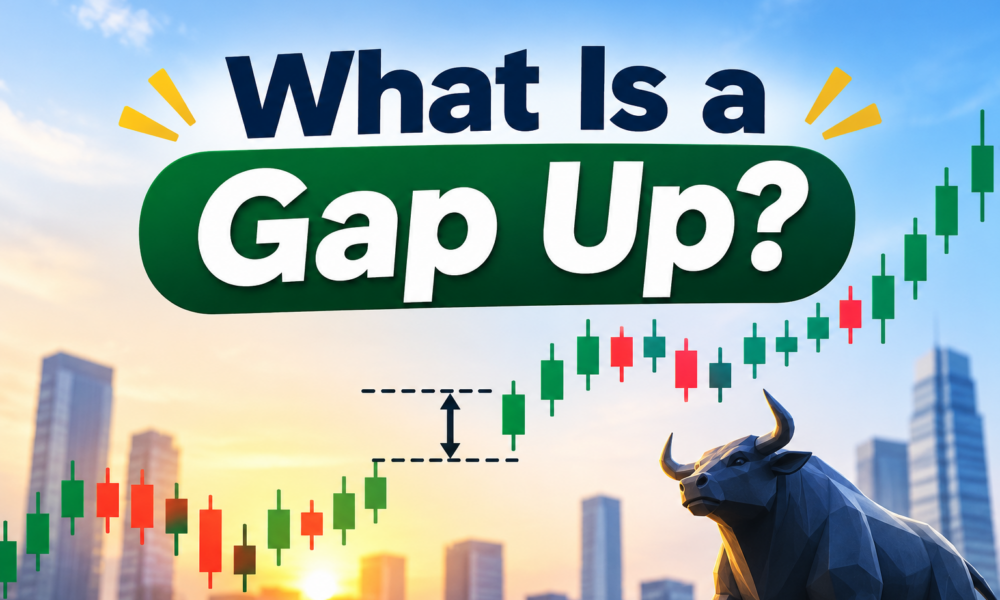
Basically, it is a price gap that happens when a stock opens at a price higher than the previous day’s closing price, with no trading in between. The stock skips over a range of prices instead of climbing through them step by step.
Table Of Content
What is a gap up in stock market terms? It is a bullish gap that tells you buyers were more eager than sellers before the opening bell. A gap up stock often draws attention because the market has already moved before most traders can react.
How a Gap Up Appears on a Stock Chart
On a stock chart, it shows as an empty space between two candles. The low of the new candle sits above the high of the previous one. Traders call this a gap up candlestick, and it is easy to spot on daily charts.
Many people call this a gap up chart pattern, though a single gap is not a full pattern by itself. Technical analysis looks at what the price does next. A gap that holds and keeps rising tells a different story than one that fades within minutes.
Why Does a Gap Up Happen?
Its opening usually starts with news that arrives while the market is closed. Overnight news and pre-market trading let investors place orders before the regular session begins. When those orders pile up on the buy side, the opening price jumps.
In India, the NSE determines the opening price during its pre-open session based on the demand and supply of buy and sell orders.
The most common causes:
- Earnings announcement: results or guidance beat expectations.
- Positive news: a new contract, product launch, or approval.
- Analyst upgrades: a respected firm raises its rating or price target.
- Market-wide rallies: strong index futures lift most stocks together.
- Strong demand: heavy buying pressure with few sellers willing to part with shares.
- Example
Say a stock closes at $50 on Monday. After the close, the company reports earnings that beat estimates and raises its outlook. On Tuesday, the stock opens at $54.
That is a gap up of $4, or 8%. No shares traded between $50 and $54 at the open.
Gap Up vs Gap Down
A gap down is the mirror image. The stock opens below the previous day’s closing price, often after bad earnings or negative news. Gap up vs gap down comes down to direction and mood: one shows buying pressure, the other shows selling pressure.
Each creates volatility and leaves a price gap that traders watch closely.
How to Trade a Gap Up
Traders read a it as a sign of bullish market sentiment. Old support and resistance levels matter, because a gap that clears resistance can start a breakout. Heavy trading volume adds weight to the move.
The main risk is a gap fill. This happens when the price falls back to the previous close and closes the gap. Gap fills can happen when the news is minor or buyers run out.
Here is a simple trading strategy many beginners study:
- Check the cause. Strong news usually holds up better than vague rumors.
- Let the first 15 to 30 minutes pass. Opening trades are volatile and price action often settles afterward.
- Confirm with volume. Heavy participation suggests real buying pressure.
- Mark key levels. Note the previous close and nearby support and resistance.
- Set a stop loss. Decide your exit before you enter, in case the gap fills.
Some traders avoid chasing the gap and wait for a small pullback instead. No method works every time. Gaps can reverse fast, so size your positions carefully and practice on a demo account first. This article is for education and is not financial advice.
Key Takeaway
A gap up happens when a stock opens above the previous day’s closing price, leaving a visible gap on the chart. It reflects strong buying interest, but it does not guarantee more gains. Learn to read the cause, volume, and price action, and you will judge each gap with a clearer head.