



What Is Ask Price?
Open any stock on your trading app and you will see two prices sitting side by side: the bid and the ask. So, what is ask price? It is the lowest price at which someone is currently willing to sell a...

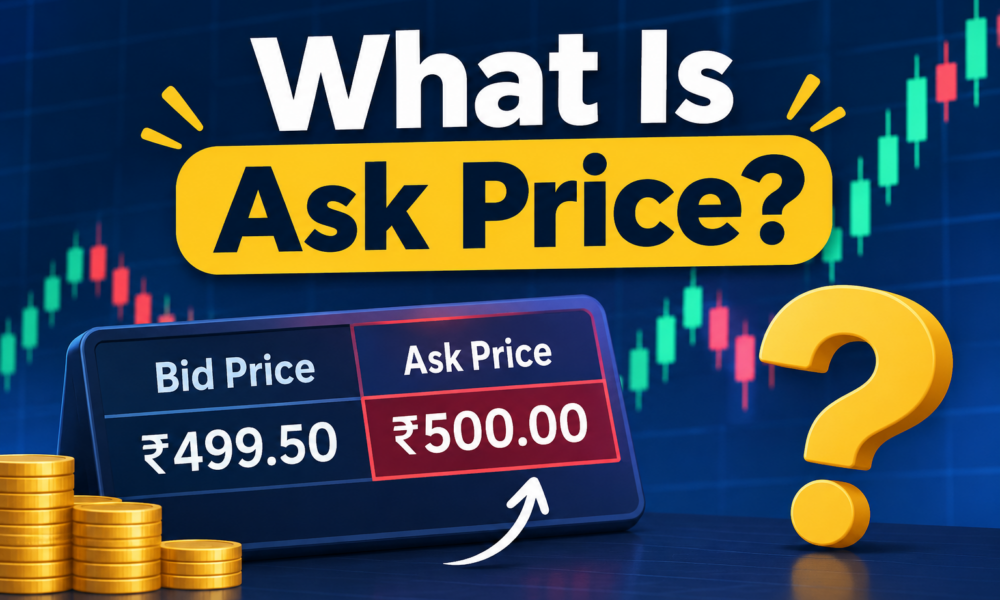
Open any stock on your trading app and you will see two prices sitting side by side: the bid and the ask. So, what is ask price? It is the lowest price at which someone is currently willing to sell a stock. If you want to buy right now, this is usually the number you will pay.
Table Of Content
What Is Ask Price in the Stock Market?
The ask price meaning is simple. It is the selling price of a stock, as quoted by sellers. Say one seller wants ₹502 per share, another wants ₹503, and a third wants ₹505. The ask price on your screen will be ₹502, because it is the lowest of the three.
You may also see it called the offer price. On exchanges like NSE and BSE, both terms mean the same thing.
How Does Ask Price Work?
Every listed stock has a stock market order book, which is a live list of pending buy and sell orders. Buyers and sellers keep adding, changing, and cancelling orders, so the ask price keeps moving through the trading day.
A trade happens when a buyer agrees to a seller’s price, or a seller agrees to a buyer’s price. That executed price becomes the last traded price, often called the market price.
So what does ask price mean in trading, practically? Your order type decides. A market order buys immediately at the best available ask. It is fast, but the price can shift slightly if the order book changes. A limit order lets you name your own price. If you set a buy limit below the current ask, your order waits until a seller comes down to meet you. It may never get filled.
Bid Price vs Ask Price
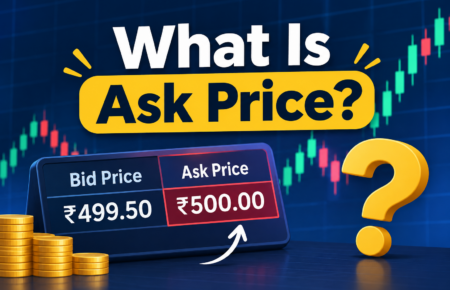
What is the difference between bid price and ask price? The bid is the highest price a buyer is ready to pay. The ask is the lowest price a seller is ready to accept. The ask is almost always higher than the bid, because otherwise a trade would already have happened.
Here is a simple example. A stock shows a bid of ₹500 and an ask of ₹502. Buyers are offering ₹500, while sellers want at least ₹502. If you place a market order to buy, you pay ₹502. If you place a market order to sell, you receive ₹500.
What Is the Bid-Ask Spread?
The bid-ask spread is the gap between those two prices. You calculate it by subtracting the bid from the ask. In our example, ₹502 minus ₹500 gives a spread of ₹2.
A narrow spread usually means many buyers and sellers are active. A wide spread suggests fewer participants, which makes trading harder. Think of the spread as a small hidden cost: if you bought and sold instantly, you would lose the spread.
What Factors Affect the Ask Price?
Demand and supply matter most. When more people want a stock, sellers raise their asking prices. Company news, quarterly results, and the overall market mood also play a part.
Liquidity matters too. Heavily traded large-cap stocks usually have tight spreads, while small, rarely traded stocks often have wider ones. Finally, each seller decides their own price, so their expectations shape the ask as well.
You can also learn how trading volume helps indicate how actively a stock is being traded.
Why Is Ask Price Important for Investors?
The ask price tells you what you will actually pay when buying, not just what the chart suggests. Ignore it, and a purchase can cost more than you planned, especially in thinly traded stocks. For example, if a stock’s last traded price is ₹500 but the ask is ₹502, a market order buys at ₹502. On 100 shares, that is ₹200 more than the last traded price. Over many trades, those small gaps can add up quickly.
Checking the spread before you order also helps you choose between a market order and a limit order. For small-cap or illiquid shares, a limit order usually gives you more control over your buying price.
Conclusion
So, what is ask price? It is the lowest price sellers will accept right now. Read it alongside the bid, watch the spread, and choose your order type with care. That small habit can save you money on every trade.