



What Is Unsystematic Risk?
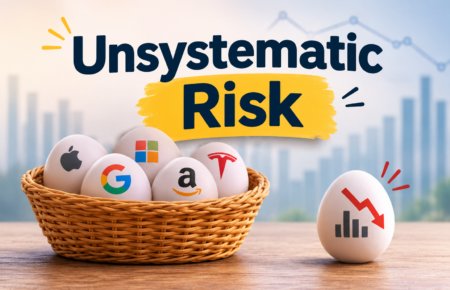
It is the risk that belongs to one company or one industry, not the whole market. If a single business has a bad year because of its own problems, that is unsystematic risk at work. Investors also...

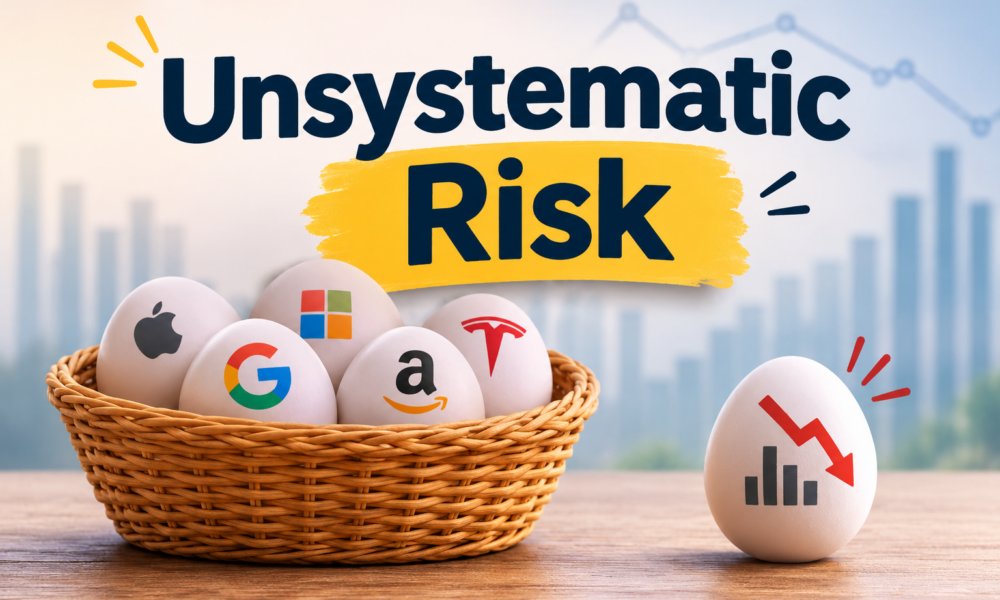
It is the risk that belongs to one company or one industry, not the whole market. If a single business has a bad year because of its own problems, that is unsystematic risk at work. Investors also call it diversifiable risk, specific risk, or idiosyncratic risk, and the good news is that you can reduce it with smart planning.
Table Of Content
Understanding Unsystematic Risk
Think of it like a restaurant on a busy street. Even when the whole neighborhood is doing well, one restaurant can struggle because its chef quit or a health inspector found problems. The street did nothing wrong. That one place had its own trouble.
That is the heart of what is unsystematic risk. It comes from factors tied to a specific company, which is why people also call it company-specific risk or stock-specific risk. It has nothing to do with interest rates, recessions, or wars. It is about one firm and the choices and events inside its own walls.
How it Works in Finance
In finance, every investment carries some uncertainty. Analysts split that uncertainty into two buckets. One bucket covers forces that hit everything at once. The other covers problems that hit a single name. Unsystematic risk in finance lives in that second bucket, and it shows up as sudden price drops, weak earnings, or surprise news.
Here is the useful part. Because these problems are random and separate from company to company, they tend to cancel each other out across a group of holdings. One stock stumbles while another rises. That pattern is why investment risk of this kind can be spread out so well, and it is a core idea in risk management.
Types
There are a few main types of unsystematic risk, and they often overlap. Business risk is the first. It covers anything that threatens a company’s ability to sell its products and make a profit, such as weak demand, tough competitors, or a poor strategy.
Financial risk is the second. This one comes from how a company pays for itself. A business loaded with debt has to keep making payments even when sales fall, which can squeeze it fast.
Operational risk is the third. It covers breakdowns in daily work, like a factory fire, a software failure, or a broken supply chain. Add in legal and regulatory risk, where a new rule or a lawsuit hits one firm harder than its peers, and you have the full picture.
Examples
Real stories make this easier to see. Imagine a car maker that recalls a million vehicles because of a faulty brake part. The recall costs money, hurts trust, and drags the share price down. Other car makers may barely move. That is a clean case of one company paying for its own mistake.
Here are a few more unsystematic risk examples. A retailer loses its biggest supplier overnight and shelves go empty. A tech firm sees its founder leave after a public fight with the board. A small drug company watches its only promising medicine fail a late-stage trial. An airline takes on too much debt before buying new planes.
Each story hurts one company or a small corner of the market. None of them says anything about the economy as a whole.
Unsystematic Risk vs. Systematic Risk
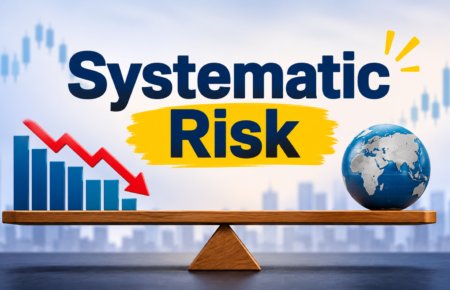
Systematic risk, often called market risk, affects nearly every investment at the same time. Think of inflation, rising interest rates, a deep recession, or a global crisis. When that kind of storm arrives, even strong companies see their shares fall.
The simple difference is reach. Unsystematic risk is narrow and can be spread out. Systematic risk is wide and cannot be diversified away.
How to Reduce Unsystematic Risk
The main answer to how to reduce unsystematic risk is portfolio diversification. Owning many stocks across different industries, company sizes, and regions means one bad event cannot do much damage. A recall at one car maker matters little if it is a tiny slice of your holdings.
For more information on how diversification can help reduce investment risk, see the SEC’s investor guidance on diversification.
Funds can also make this easier, since a single index fund holds hundreds of companies at once. Diversification has limits, though. It will not shield you from a market-wide drop, and spreading money too thin can add cost without much benefit. Good risk management means knowing which risks you can reduce and which ones you simply have to accept.