




What Is Concentration Risk?
Concentration risk is what happens when you put too much money into one place. One stock, one sector, one fund, one idea. It feels fine until that one thing turns against you, and suddenly your whole...

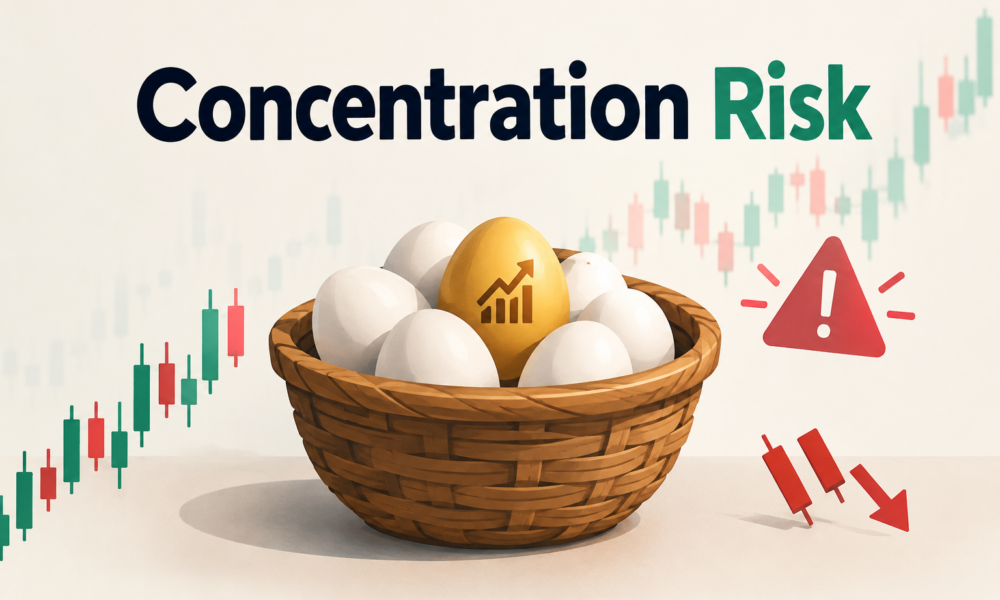
Concentration risk is what happens when you put too much money into one place. One stock, one sector, one fund, one idea. It feels fine until that one thing turns against you, and suddenly your whole portfolio feels the pain at once.
Table Of Content
Think of the old advice your grandmother probably gave you about eggs and baskets. If you carry all your eggs in a single basket and it slips, you lose everything in one go. Investing works the same way. When your money is spread out, one bad basket does not ruin your morning.
In investing terms, it means your returns depend too heavily on a small number of holdings. It is not about being reckless on purpose. Most investors slide into it slowly, buying more of what already did well, until one bet becomes half their portfolio.
Common Types of Concentration Risk
- Single-stock risk: holding a large chunk of your money in one company, maybe because you work there or you love the brand
- Sector concentration risk: loading up on IT stocks during a good year, or piling into pharma because everyone is talking about it
- Asset-class risk: keeping almost everything in equity with nothing in debt, gold, or cash
- Geography risk: investing only in Indian markets with zero exposure elsewhere
- Mutual fund overlap: owning five different mutual funds that all secretly hold the same top ten stocks
A classic Indian example is an investor who keeps adding to IT stocks because the sector had a great run for two years, without realising how exposed they have become.
Real-Life Example
Ramesh, a software engineer in Pune, put nearly 65% of his savings into his own company’s stock and a couple of other IT names he liked. For a while, his portfolio looked brilliant on paper. Then a global slowdown hit the IT sector hard, and his portfolio fell almost 40% in under a year. This concentration risk example shows how one sector’s bad phase can undo years of saving.
How to Reduce Concentration Risk in Your Portfolio
- Spread your money across sectors instead of chasing whichever one is hot right now
- Mix asset classes: some equity, some debt, a little gold, and enough cash for emergencies
- Use index funds or diversified mutual funds so no single stock can sink your whole plan
- Rebalance your portfolio every six to twelve months so no single holding grows too large
- Check for mutual fund overlap before buying a new fund, since many schemes hold similar large-cap names
- Set a personal cap, such as keeping any single stock below 8% to 10% of your portfolio, if that fits your risk tolerance and investment plan.
These steps around how to reduce concentration risk are not complicated. They just need consistency, not genius.
Why Understanding Concentration Risk Matters for Indian Investors
Indian markets move in cycles. IT looks unstoppable for two years, then banking takes over, then pharma has its moment, then it is someone else’s turn. If your money is stuck in whichever sector just finished its run, you end up buying high and holding through the fall.
This is also why portfolio diversification and concentration risk get discussed together so often. Portfolio diversification is not about diluting your returns for no reason. SEBI’s investor guidance on managing investment risk also highlights diversification across different asset classes and within an asset category.
For long-term wealth, protecting your downside matters just as much as chasing upside. A portfolio built without concentration risk in mind can survive market cycles that would otherwise wipe out an overconfident, concentrated bet.
At the end of the day, it is simple to understand and just as simple to manage, once you decide to do something about it. Spread your bets, review them regularly, and do not let one good year convince you that one stock or sector is a sure thing. Smart investing is not about chasing the hottest stock; it is about protecting your capital when markets turn.