




What Is a Straddle Option Strategy? (Options Trading Strategy Explained)
A straddle option strategy in options trading means you are betting on movement, not direction. A straddle makes money when Nifty moves, whether it goes up or down. It profits from the swing, not...

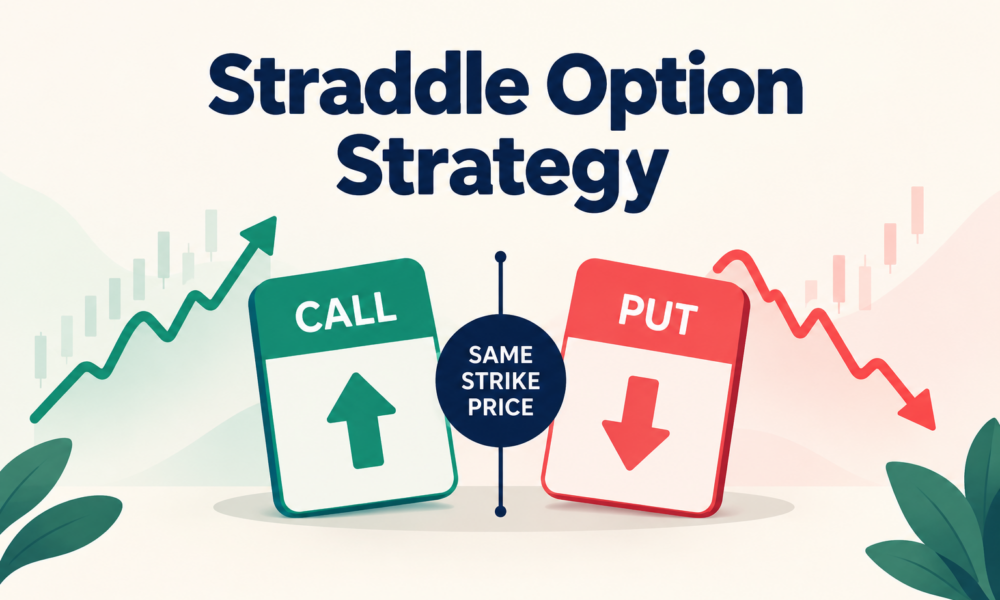
A straddle option strategy in options trading means you are betting on movement, not direction. A straddle makes money when Nifty moves, whether it goes up or down. It profits from the swing, not from predicting the direction.
Table Of Content
If you’re wondering what a straddle in options is, the basic idea is simple: you take both sides of the market using a call and a put.
Understanding the Straddle Option Strategy
A straddle is a popular options strategy where you buy (or sell) a call and a put option on the same stock or index. They have the same strike price and expiry date. That’s it. You don’t need complicated math to understand the basic idea.
So why would anyone do this? Sometimes, you feel sure something big is coming. It could be an RBI policy announcement, a Union Budget, or a company’s quarterly results. But you don’t know if the news will push prices up or down. A straddle lets you sit on both sides of that fence.
Long Straddle vs Short Straddle
This options trading strategy has two flavors in India, and beginners often mix them up.
- Long straddle: You buy both the call and the put. This long straddle strategy aims to profit from a big move in either direction.
- Short straddle: You sell both the call and the put. You’re betting the market stays quiet and range-bound. You collect premiums upfront. But if the market moves sharply, your losses can be significant
A long straddle strategy is safer for beginners. This is because you limit your losses. Experienced traders usually use risk management techniques when managing short straddles.
How a Straddle Works: Simple Example
Let’s make this real with a Nifty straddle strategy example. Nifty is the underlying index for these contracts, with call and put options available at different strike prices.
This straddle strategy example shows why the total premium matters when calculating your break-even levels.
To find the break-even point in straddle math, do this:
- Add the total premium to the strike price
- Subtract the total premium from the strike price
- Upper break-even: 22,000 + 290 = 22,290
- Lower break-even: 22,000 – 290 = 21,710
If Nifty closes above 22,290 or below 21,710 on expiry, you’re in profit. Anywhere between those two levels, you lose money, though never more than the ₹290 you paid. A Bank Nifty straddle example works the same way. It uses Bank Nifty’s specific premiums and strike gaps.
When to Use a Straddle in the Indian Market
A straddle is essentially an options volatility strategy because the trader is focused on how much the market may move rather than whether it will move up or down. Think about Budget Day, RBI policy days, election results, or big earnings announcements.
But when does this actually make sense for you? Only when the expected move is genuinely large enough to beat your cost. Options lose value daily due to theta decay. This means time works against you as expiry approaches. If Nifty barely moves, your straddle can quietly bleed money even without any crash or rally.
If you’re wondering when to use a short straddle in trading, think of a quiet, sideways market. You expect calm instead of chaos. That’s a trickier call for most retail traders, so approach it carefully.
Straddle vs Strangle: Key Difference
People often confuse straddle vs. strangle. A straddle involves a call and a put option at the same strike price. A strangle uses two different strike prices: one above and one below the current price. This makes it cheaper to enter. The trade-off is that you need a bigger move to break even.
Final Thoughts: Is Straddle Right for You?
A straddle isn’t magic; it’s a smart way to trade volatility, not direction. It works best during real, high-impact events. It always requires discipline in cost, timing, and position size.
If you are new, begin with paper trading or tiny amounts. Then, try using straddles in live markets. Watch how premiums change. Observe some Budget days and RBI policy meetings. After that, slowly increase your positions.