




What Is Risk Management?
Risk management refers to the practice of protecting your capital and managing potential losses while aiming for long-term growth. In other words, it is a set of measures that helps prevent poor...

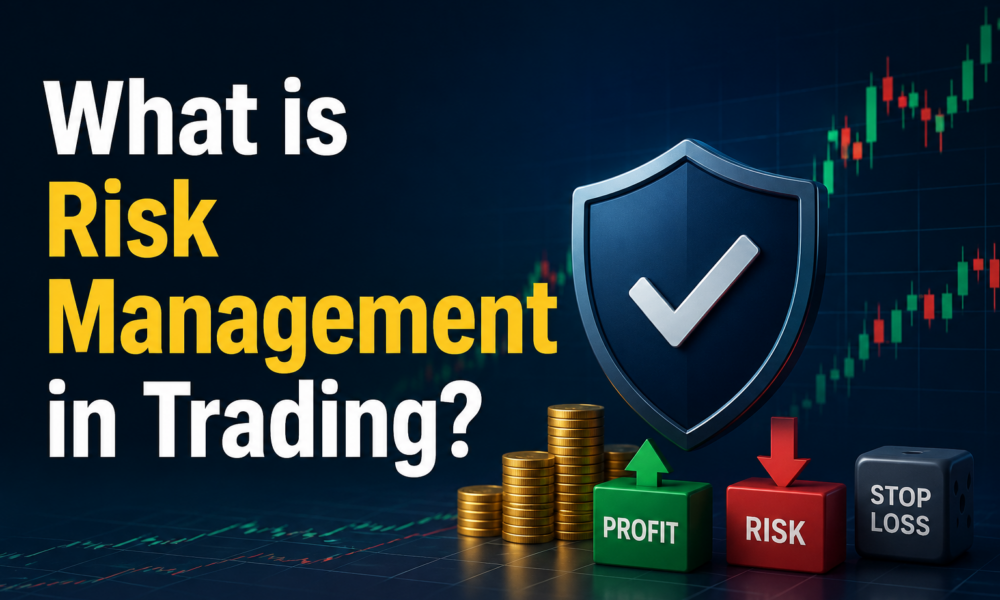
Risk management refers to the practice of protecting your capital and managing potential losses while aiming for long-term growth. In other words, it is a set of measures that helps prevent poor trades and mistakes from draining your account. So, if you have ever asked yourself, “What is risk management in trading?”, you might think of it as a seat belt in the stock market, something that cannot prevent you from getting hurt but will decrease the damage if an accident happens.
Table Of Content
Every trader and investor must accept that there are always unpredictable factors that influence prices and no trading strategy is perfect. Risk management in trading and investing helps you manage potential losses, complement your strategy, and reduce emotional decision-making.
Why Risk Management Matters in the Stock Market
In particular, many beginners spend too much time trying to find a winning stock or market position, and do not consider what can go wrong. This highlights the importance of risk management in the stock market, where losses are inevitable, and their size and timing are uncertain.
Effective stock market risk management is crucial to protect your money while riding the losing streak, which every investor experiences. Secondly, it can help prevent panic selling by defining the potential loss before entering a trade. And thirdly, without risk management, the best trading strategy will fail due to emotional bias after one big loss, destroying months of profits.
Important Risk Management Strategies
The basics of understanding how to trade risky financial instruments are built on several key concepts.
- Position sizing: It is the process of allocating a specific portion of capital to each trade based on factors such as risk and volatility rather than impulsive decisions.
- Stop Loss: It is a predetermined price level at which a stop-loss order may trigger an automatic exit from a trade to limit further losses.
- Risk-reward ratio: It is the potential risk of a trade with its potential reward. Traders may target ratios such as 1:2 or 1:3, depending on their strategy and risk tolerance.
- Portfolio Diversification: It refers to the distribution of funds among several types of securities or assets to reduce the impact of a poor-performing investment on the overall portfolio.
- Portfolio Allocation: It is the distribution of capital among different asset classes, sectors, industries, or securities to optimize the balance between risk and reward.
- Emotional Discipline: It is a fundamental concept in trading that reflects a person’s ability to control their feelings and behavioral reactions. Discipline helps to minimize the probability of mistakes that can be caused by fear, greed, or other impulses.
An example of position sizing is as follows: if the capital is ₹1,00,000 and the risk per trade is 2%, the maximum risk per trade will be ₹2,000. If the stop-loss is set 10 points below the entry price, the position size would be 200 shares, since 200 × 10 = ₹2,000. Thus, position sizing helps the trader determine how many shares or units to buy without exceeding the maximum risk per trade.
Risk Management in Trading vs Investing
Risk management in trading is typically short-term oriented, as it is based on stop-losses, position-sizing techniques, and rapid decision-making. A trader can enter and exit a trade within minutes, hours, or days, depending on the situation, as they seek to limit losses within a short window. Their risk management approach generally focuses on controlling short-term trade risk and limiting potential losses.
By contrast, risk management practices among investors are designed to have long-term success, as they seek to benefit from fundamental analysis rather than market timing. It focuses more on diversification and appropriate asset allocation to manage risk through short-term market fluctuations and support long-term financial goals.
Final Takeaway
Risk management strategies for beginners are not about avoiding losses completely, since that is not realistic in trading or investing. They are about controlling how much you could lose when things go wrong, so your capital survives for better opportunities ahead. No method can guarantee profits or remove risk from the stock market entirely.