

What Is Bid Price?
Bid price is the highest price a buyer is ready to pay for a share at a particular moment. If you open a stock on your trading app and see a bid of ₹250.40, it means someone in the market is willing...

Bid price is the highest price a buyer is ready to pay for a share at a particular moment. If you open a stock on your trading app and see a bid of ₹250.40, it means someone in the market is willing to buy that share at that rate right now.
Table Of Content
Bid Price Meaning
In simple words, the bid price is the buyer’s price. It shows what the demand side of the market is offering. Every buyer places an order saying how much they will pay and how many shares they want. Among all those offers, the highest one becomes the bid price you see on the screen.
The bid price keeps changing during market hours. It moves as new buyers arrive, old orders get filled, or traders cancel and change their offers. So it is a live number, not a fixed one.
How Bid Price Works in the Stock Market
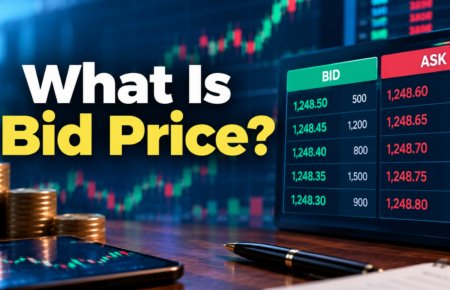
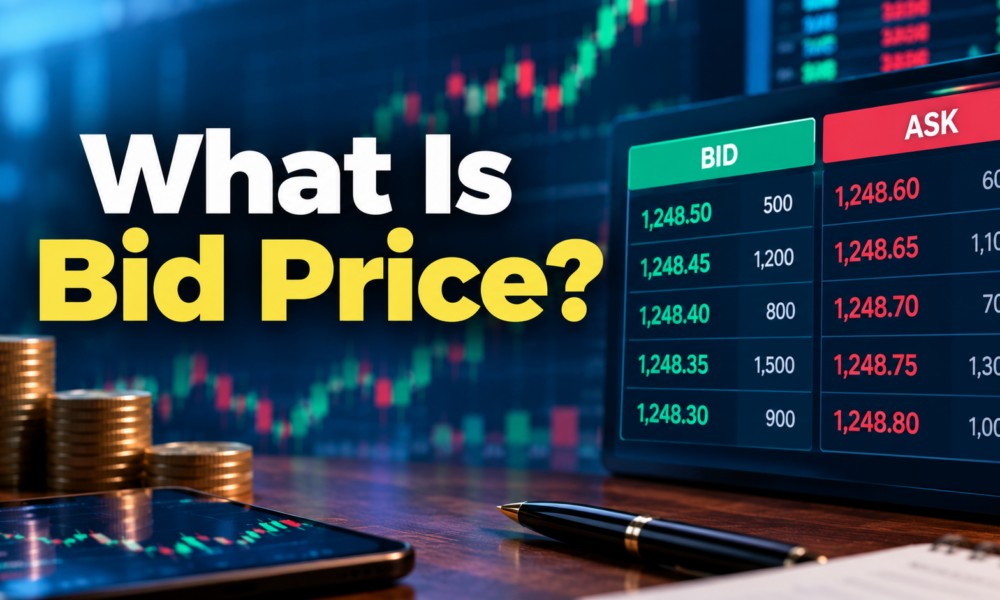
Stock exchanges like NSE and BSE run an order book. Think of it as a running list of all pending buy and sell orders for a share. The buy side is arranged from the highest price to the lowest. The top entry on that list is the best bid.
Next to each bid, you will see a bid quantity. This is the number of shares buyers want at that price. If the screen shows ₹250.40 with a quantity of 1,200, buyers are collectively offering to take 1,200 shares at that rate.
A trade happens when a seller agrees to sell at the bid price, or when a buyer agrees to pay the seller’s price. Until the two sides meet, orders simply wait in the book.
For a closer look at how buy and sell orders are matched, refer to the NSE’s explanation of its trading system.
Bid Price vs Ask Price
The ask price is the opposite side. It is the lowest price a seller is willing to accept, so it is the seller’s price. Ask quantity tells you how many shares sellers are offering at that rate.
The ask is almost always a little higher than the bid. If it were equal or lower, the two orders would match immediately and a trade would happen.
Bid-Ask Spread Explained
The gap between the bid and the ask is called the bid-ask spread. It works like a small hidden cost, because you buy at the higher price and sell at the lower one. Traders also call it the spread cost.
A narrow spread usually means many buyers and sellers are active. A wide spread suggests few participants and weaker market liquidity. Stocks with high trading volume generally have tighter spreads, because plenty of orders compete on both sides. Thinly traded shares often have wider spreads, so entering and exiting them can cost more.
Example of Bid Price
Say a share shows these figures on your screen:
- Bid price: ₹100.50
- Ask price: ₹100.60
- Spread: ₹0.10
If you place a market order to buy, you will usually pay near ₹100.60, the seller’s price. If you place a market order to sell, you will usually receive near ₹100.50, the buyer’s price.
Now suppose you buy 500 shares at ₹100.60 and sell them right away at ₹100.50. You lose ₹0.10 on each share, which is ₹50 in total, before any brokerage or taxes. That small gap is the spread at work.
Before placing a trade, it helps to understand what a market order is and how it is executed at the best available market prices.
Why Bid Price Matters for Traders
Execution price: When you sell with a market order, the bid price decides roughly what you receive.
Order placement: With a limit order, you choose your own price. A buyer who sets a limit at the current bid joins the queue of buyers.
Reading a stock quote: The bid, ask, and their quantities give a quick view of demand and supply. Heavy bid quantity against thin ask quantity shows strong buying interest, though it cannot predict the next price move.
Cost awareness: Checking the spread before a trade shows what the entry and exit may cost you, especially in less active shares.
Key Takeaways
- Bid price is the highest price a buyer will pay right now.
- Ask price is the lowest price a seller will accept.
- The gap between them is the bid-ask spread.
Final Quality Check
Before every order, check the bid, the ask, and the spread. This is education, not financial advice.