




VWAP Strategy: The Intraday Trader’s Secret Weapon
Ever entered a trade too early and then watched the price reverse almost immediately? Every intraday trader has faced that frustrating moment. Instead of guessing where the market might move, many...

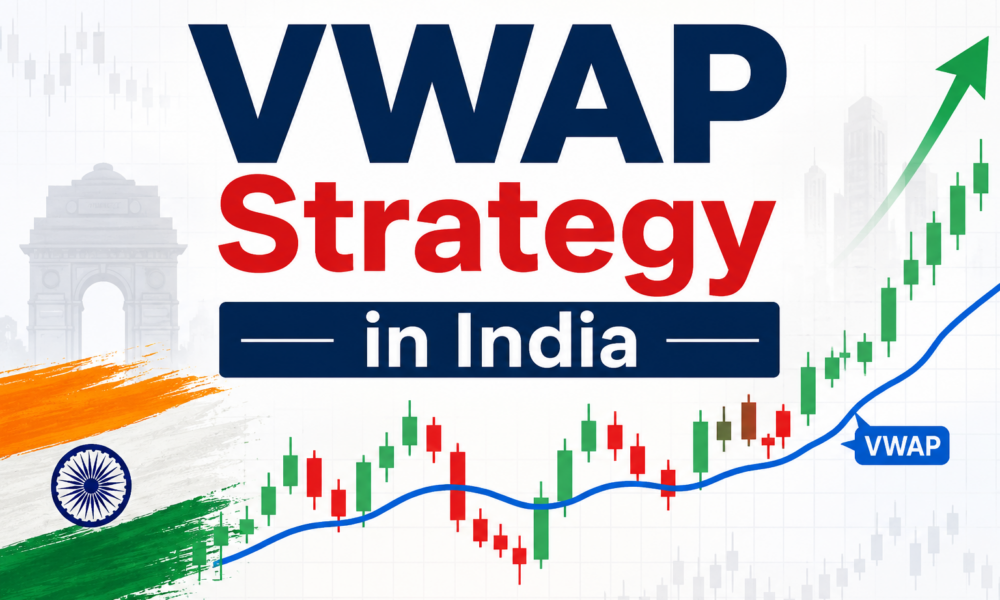
Ever entered a trade too early and then watched the price reverse almost immediately? Every intraday trader has faced that frustrating moment. Instead of guessing where the market might move, many experienced traders rely on the VWAP strategy to make smarter decisions. Simply put, the Volume Weighted Average Price shows the average price of a stock after considering both price and trading volume.
Table Of Content
It helps you understand whether buyers or sellers are truly in control. Once you understand how this simple indicator works, your entries become more disciplined, your exits improve, and unnecessary trades reduce significantly.
What Is VWAP Strategy?
- VWAP stands for Volume Weighted Average Price. Unlike a normal moving average, it gives more importance to price levels where higher trading volume has taken place. Means, it tells you the average price at which most market participants have traded during the day.
- The VWAP indicator resets at the beginning of every trading session, so it is mainly useful for intraday trading rather than long-term investing. Most traders use it on one-minute or five-minute charts because it reacts well to short-term price movements.
- The formula = Σ (Price × Volume) ÷ Σ Volume
- Where:
- P = Price at each trade (or candle’s typical price)
- V = Volume traded at that price
- Σ = Sum of all values during the trading session
Why Institutions Love VWAP?
- Large institutions don’t buy thousands of shares randomly. They often use the VWAP strategy to judge whether they are getting a fair execution price without pushing the market too much.
- If the market price stays above VWAP, it usually signals a bullish bias because buyers are willing to pay higher than the day’s average price. When the price remains below VWAP, the sentiment is generally bearish.
- Many professional traders also compare their execution quality against VWAP during institutional trading. That’s why this indicator often acts like a magnet where prices revisit before continuing the main trend.
Simple VWAP Strategy for Intraday
- If you’re wondering how to use VWAP strategy for intraday trading in India, keep it simple. Don’t jump into the first candle after the opening bell.
- Instead, observe the first thirty to sixty minutes and identify whether the market is making higher highs or lower lows.
- Once the trend becomes clear, patiently wait for a pullback to VWAP instead of chasing the price. This pullback to VWAP often offers a lower-risk entry.
- When the price reaches VWAP, watch for a confirmation candle like a hammer in an uptrend or a bullish engulfing pattern. In a downtrend, look for bearish confirmation instead. Enter the trade on the next candle after confirmation appears.
Keep these VWAP entry and exit rules in mind:
- Trade only in the direction of the prevailing trend.
- Enter after confirmation near VWAP, never before.
- Place the stop-loss slightly beyond VWAP.
- Target the previous swing high, swing low, or maintain a one-to-two risk-reward ratio.
You can improve this best VWAP intraday strategy further by combining trading with VWAP alongside rising volume or a short moving average. When both indicators agree, the probability of a cleaner move generally increases without making the chart unnecessarily complicated.
Common Mistakes to Avoid
Many beginners blame the indicator when the real problem is their execution.
- One common mistake is taking trades against the VWAP support and resistance bias just because a candle looks attractive.
- Another is ignoring trading volume. A breakout without volume often loses momentum quickly.
Some traders also stretch the VWAP strategy onto daily or weekly charts, forgetting that it resets every trading day. Finally, avoid overtrading during the last part of the session when volatility becomes unpredictable and risk increases. Only patience matters more than constantly clicking the buy and sell buttons.
No strategy works perfectly every single day, and that’s completely normal. Practice the VWAP strategy through paper trading, review your charts, and build confidence before risking real money. Try this on Nifty 50 stocks tomorrow, note your observations, and keep improving one trade at a time.