




Trading Scams: Fake Trading Courses and Guaranteed-Return Schemes
Imagine you are scrolling Instagram and see an ad. A “market guru” shows huge profit screenshots, a luxury car and happy student testimonials. He promises fixed daily income if you join...

Imagine you are scrolling Instagram and see an ad. A “market guru” shows huge profit screenshots, a luxury car and happy student testimonials. He promises fixed daily income if you join his paid course and private Telegram group.
Table Of Content
Paid financial education is not the problem. The warning sign is when education arrives with guaranteed returns, pressure tactics, doubtful credentials or unofficial apps. That combination is how Trading Scams usually work, and fake trading courses are often the first door.
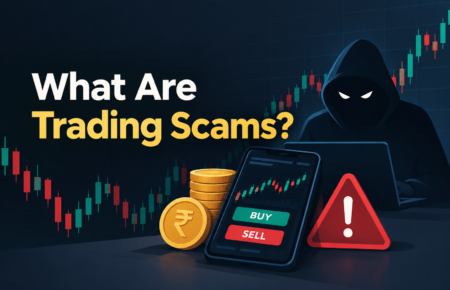
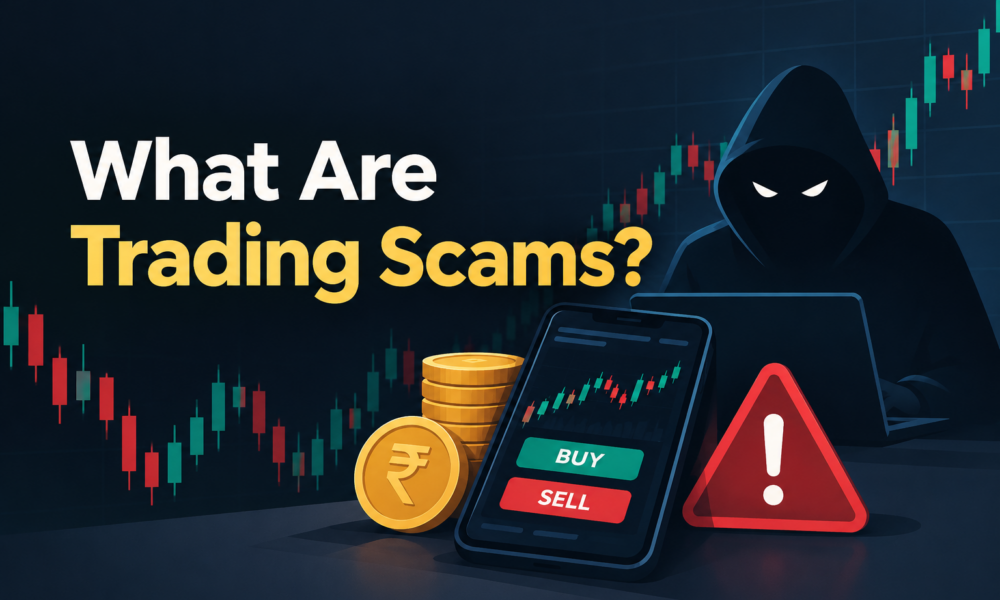
What Are Trading Scams?
A trading scam is any fraudulent scheme built to collect course fees or investor money. It can involve fake trading courses, unauthorized investment advice, guaranteed-profit offers, fake trading platforms, social media groups and self-styled experts.
Most stock market scams follow the same script. Many online trading scams in India start with an ad or a friendly message, and investment scams work because people want quick money.
Not every paid trading course is a scam. Many teachers run honest classes. The focus here is on behaviour: false promises, fake credentials and pressure. Each trading scam shows some of these signs.
1. Guaranteed Returns Are the Biggest Red Flag
Watch out for lines like:
- “₹1,000 every day”
- “Fixed 5% monthly return”
- “Double your money”
- “100% accurate calls”
- “Zero-loss strategy”
- “Guaranteed profit” or “loss recovery guaranteed”
The share market moves up and down every day. Nobody can offer guaranteed returns in it, because market risk never disappears. According to SEBI’s investor material, stock market guru scams can involve paid courses, private groups, guaranteed-profit claims and pressure tactics. NSE also warns investors about assured returns in the securities market.
That does not make every course seller a fraudster. Still, guaranteed returns are one of the clearest signs of stock market fraud.
2. Fake Trading Courses Often Sell a Lifestyle, Not Education
Fake trading courses often lean on luxury cars, expensive watches, hotel-room videos, payment screenshots and “live trading” clips. Some also claim a secret strategy that only paying students receive.
None of this proves trading ability. A person showing profits online has not shown that the results are genuine, independently verified or typical of students. Fake testimonials and fake screenshots are easy to create.
SEBI describes social media guru scams that use displayed profitable trades, exaggerated success stories and paid courses. Many trading course scams depend on this kind of display.
3. Be Careful With Instagram, YouTube, WhatsApp and Telegram Groups
Scammers reach people through sponsored ads, reels, live sessions, Telegram channels, WhatsApp groups, private VIP communities, limited-seat masterclasses and direct messages. The funnel usually looks like this:
- Free content builds trust
- A paid course follows
- A private group shares trading signals and buy and sell tips
- Then comes a request for more money or account access
Fake WhatsApp trading groups and fake Telegram trading groups work this way. If you want to understand the warning signs in more detail, see our guide to WhatsApp investment scams in India. Online trading scams also start when a stranger adds you to a group. Not every group is fraudulent, but NSE warns that unauthorized entities use social media, live broadcasts, courses, seminars and mentorship programmes to lure investors. Stock market scams in India spread quickly on these platforms.
4. Check Whether the Person Is Actually SEBI Registered
Anyone giving regulated investment advice needs proper registration. Do not rely on words like “SEBI approved”, “government certified” or “registered expert”. Logos and registration numbers on a website can be copied.
Use the official SEBI website to check the person’s name, registration number and status. A genuine SEBI registered advisor will not mind this check. A false claim of being a SEBI registered advisor is a serious warning sign.
Registration does not mean profits are certain or that misconduct is impossible. But NSE advises investors to deal only with SEBI-registered intermediaries, and learning how to verify a SEBI registered advisor takes only a few minutes. Never accept a certificate screenshot as proof.
5. Never Trust Fake Trading Apps or Unofficial APK Files
Fake trading apps often imitate genuine broker platforms. A link arrives on WhatsApp or Telegram, usually as an unofficial APK file. Once installed, the app shows a fake account balance, a fake profit dashboard and even a fake KYC screen.
The profit is not real. When you try to withdraw, problems appear, and you are asked for more deposits to “unlock” the money. NSE warns about unauthorized apps that resemble registered trading members and advises against downloading unknown files.
These fake trading apps in India are a form of cyber fraud, and they are among the most dangerous investment scams. Do not install any app from a link a stranger sends you. Even one of the fake trading apps can steal your login credentials.
6. Never Share Your Demat Login, OTP or Trading Password
Genuine trading education does not need control of your brokerage account. Never casually share your:
- Demat login
- Trading password
- OTP, PIN or TPIN
- Screen-sharing or remote-control access
- Bank details or UPI PIN
NSE says investors should not share login IDs, passwords, OTPs or TPINs with anyone. If someone says they need access to “recover your losses” or “trade on your behalf”, treat it with extreme caution. That is a classic trading scam move, and it can turn into stock market fraud very quickly.
7. Watch for Pressure Tactics and Fake Urgency
You may hear lines like “Only 10 seats left”, “Offer ends tonight”, “VIP access closes in one hour”, “Everyone in the group is making money” or “Take a loan and recover your loss”.
This is FOMO, the fear of missing out. Scammers use it so you pay first and check later. SEBI’s investor material lists limited spots and “don’t miss out” messages among guru scam patterns.
Genuine education does not need an instant payment. Trading course scams depend on rushing you, so a day’s pause costs nothing.
8. Beware of “Loss Recovery” and Guaranteed Profit Strategies
A common pitch is: “You lost money? Join my course and I will recover it.” This is dangerous. Doubling-down claims, Martingale-style promises, “100% accurate” strategies, guaranteed intraday profits and fixed daily income all ignore price risk.
No one can guarantee recovery in a market where prices can fall. Guaranteed returns after a loss are the least believable promise of all. Recovery schemes usually demand more deposits, which deepens the loss. Many investment scams target people who have already lost money, so a loss recovery offer is often a second trading scam aimed at the same victim.
9. Know the Difference Between Trading Education and Investment Advice
| Type | Examples |
|---|---|
| General education | Candlestick patterns, risk management, technical analysis, fundamental analysis, position sizing, market terminology |
| Personalized advice | Specific recommendations or services that involve your own investment decisions |
Specific recommendations about a person’s investment decisions may fall under regulated activity, depending on what is offered. Calling something a “course” does not make it unregulated. Check the regulatory requirements and registration status instead of assuming.
Some fake trading courses hide paid tips behind the word “education”. Ask whether the provider is a SEBI registered advisor before following any call.
10. Check the Platform, Payment Details and Withdrawal Process
Before sending money, check:
- The official website and company details
- SEBI registration, where relevant
- Whether the app or platform is an official broker platform
- The payment recipient’s name and bank account details
- The refund policy and course terms
- Whether you are asked to pay a personal account
- Whether withdrawal conditions are clear
A professional-looking website is not proof of legitimacy. Stock market fraud often hides behind clean designs, and trading course scams can look very polished.
Major Red-Flag Table
| Red Flag | Why It Deserves Attention |
|---|---|
| Guaranteed returns | Market returns cannot simply be promised as fixed profits |
| 100% accuracy | Unrealistic performance claim |
| Luxury lifestyle videos | Not proof of genuine trading results |
| Fake profit screenshots | Images can be manipulated |
| Urgent payment demand | Designed to reduce careful verification |
| WhatsApp/Telegram tips | Verify who is actually providing the service |
| Fake SEBI claim | Registration should be independently verified |
| Unknown APK | Could be one of the fake trading apps |
| Account access request | Creates serious security risk |
| Extra money for withdrawal | Major warning sign in a suspected fake platform |
How to Verify a Trading Course Before Paying
- Step 1: Identify the person or company. Find the legal name behind the course.
- Step 2: Check regulatory status. Verify SEBI registration through official sources, since stock market scams often fake it.
- Step 3: Question guaranteed returns. Ask how any fixed return can be promised in a market exposed to risk.
- Step 4: Check the platform. Avoid unknown APKs, fake trading apps and unofficial platforms.
- Step 5: Verify testimonials. Screenshots and social media comments are not independent proof.
- Step 6: Read the terms. Look at refund, cancellation and payment conditions, because trading course scams often keep these vague.
- Step 7: Never surrender access. Do not share passwords, OTPs, PINs or remote-access control.
What to Do If You Have Already Been Scammed
Act quickly if you think you have lost money to a trading scam or any other online financial fraud.
- Contact your bank or broker immediately. Ask them to secure your account and flag or stop suspicious transactions where possible.
- Call 1930. The National Cyber Crime Reporting Portal states that 1930 is the national helpline for immediate reporting of cyber financial fraud.
- Report the incident online. File a complaint on the National Cyber Crime Reporting Portal. It also allows reporting of suspicious websites, WhatsApp numbers, Telegram handles, phone numbers, email IDs and social media URLs.
- Preserve evidence. Save screenshots, payment receipts, UPI transaction IDs, bank statements, phone numbers, WhatsApp and Telegram messages, website URLs, app names, course invoices, emails and social media profiles. Keep APK files only where it is safe to do so.
Do not confront the suspected scammer or send any more money. Online trading scams, stock market fraud and other investment scams depend on victims who keep paying.
Trading Scams: A Simple Checklist Before You Pay
☐ Does the person promise guaranteed returns?
☐ Is the SEBI registration claim independently verified?
☐ Are they showing only winning trades?
☐ Are they creating urgency?
☐ Are they asking for payment to a personal account?
☐ Are they asking for trading-account credentials?
☐ Are they sending an APK or unknown app link?
☐ Are they using WhatsApp or Telegram to share suspicious investment tips?
☐ Are they asking for additional money to withdraw profits?
☐ Can the claims be independently verified?
Frequently Asked Questions
Can a trading course guarantee returns?
No. A course can teach concepts, but it cannot promise investment performance. Guaranteed returns in a risky market are a major warning sign, and they are common in investment scams.
How do I identify a fake trading course?
Look for guaranteed returns, fake testimonials, pressure tactics, credentials you cannot verify, payment requests to personal accounts and demands for account access. Fake trading courses often show several of these together, which is how stock market scams usually build trust.
Are online trading courses scams?
Not all of them. The issue is whether the provider makes fraudulent claims, misrepresents credentials or offers unauthorized services. Trading course scams stand out because of these behaviours, and online trading scams are built around them.
How do fake trading apps work?
They show a made-up dashboard with profits, ask for deposits and then block withdrawals or demand more money. Fake trading apps rely on trust built earlier through a group or a mentor.
Conclusion
Most Trading Scams do not look like scams at first. They look like a helpful course, a friendly group or a slick app. That is why the answer lies in checking, not in feelings.
Judge any trading course by verifiable information, transparent claims and legitimate credentials. Do not judge it by guaranteed profits, luxury displays or social media popularity. Stock market scams and trading course scams both rely on trust you have not tested. Confirm registration on official SEBI resources, keep your credentials to yourself and pause before every payment. No person, course or platform should be treated as legitimate until you have independently verified it.