



What Is Intraday Trading?
Intraday trading simply means you buy and sell shares on the same day, in the same session, in the same account, with no positions carried overnight. In a single day, buy or sell shares, and whatever...

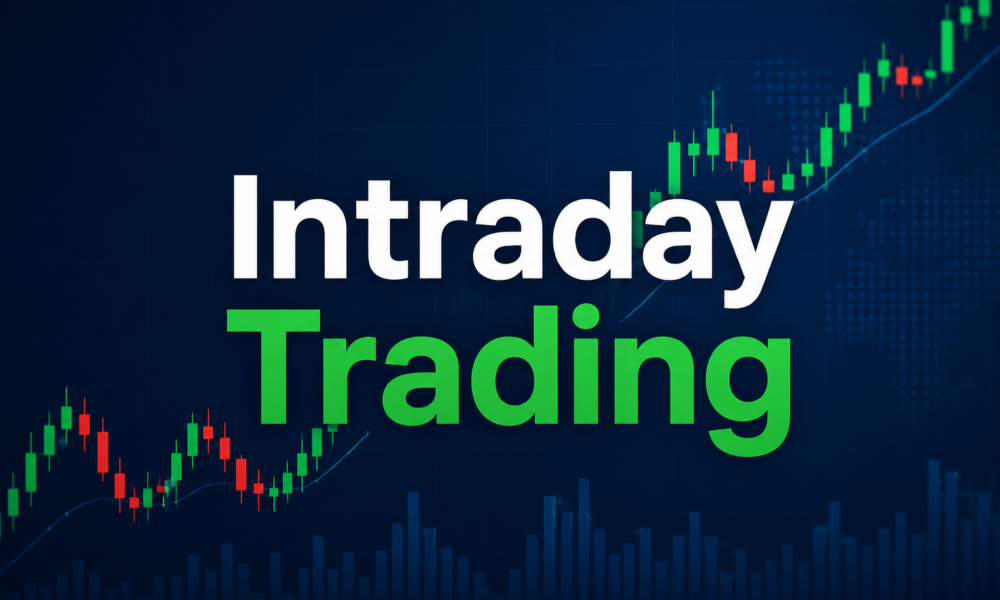
Intraday trading simply means you buy and sell shares on the same day, in the same session, in the same account, with no positions carried overnight. In a single day, buy or sell shares, and whatever profit or loss you make, you settle it before the market closes.
Table Of Content
Think of it like a sabzi mandi. You go in the morning, pick up onions at ₹30/kg, sell them at ₹35 by afternoon, and walk out with your profit, no storage, no risk overnight. That’s exactly how intraday trading works, except instead of onions, you are dealing in stocks like Reliance, HDFC Bank, or Nifty 50 index derivatives.
How It Works in India
The Indian stock market, NSE and BSE, open at 9:15 AM and close at 3:30 PM, Monday to Friday. As an intraday trader, your entire game happens within this window.
Here’s the critical part: if you forget to close your position, your broker will do it for you; this is called auto square-off, and most Indian brokers (Zerodha, Upstox, Angel One) do this around 3:15 PM. Sometimes at a price you won’t like. So always exit on your own terms, before they exit for you.
Intraday trades are tagged differently when you place the order. You will see an option like “MIS” (Margin Intraday Square-off) on most platforms. Select it correctly, or your broker may treat it as a delivery trade.
Key Terms
Bid/Ask Price — The bid is what buyers are willing to pay; the ask is what sellers want. The difference between them is the spread. Tighter spread = better liquidity.
Square Off — Closing your open position before the market ends. Bought 100 shares of Tata Motors? Selling those same 100 shares is squaring off.
Stop-Loss — A pre-set price at which your trade automatically exits to limit your loss. If Nifty ₹200 decreases and you haven’t set a stop-loss, that’s how traders blow up accounts.
Leverage — Brokers let you trade with more money than you actually have. If you have ₹10,000, you might get 5x leverage to trade ₹50,000 worth. It magnifies both profits and losses.
Liquidity — How easily you can buy or sell a stock without moving its price. Bank Nifty and Reliance are highly liquid. Avoid thinly traded small-caps for intraday, you might not find a buyer when you need one.
Why Beginners Try Intraday Trading
The appeal is real: quick profits, capital that works harder with leverage, and zero overnight risk (no bad news in the morning wiping out your position). For someone with ₹5,000–₹20,000, it feels like a shortcut to growing money fast. And sometimes it works, which is exactly what makes it addictive.
The Real Risk (This Part Matters More)
Most beginners lose money in intraday trading, not because the market is unfair, but because of three very human mistakes:
- Overtrading: Taking 10 trades a day, hoping one works. More trades = more brokerage + more chances to be wrong.
- No stop-loss: “Thoda aur wait karte hain.” This sentence has destroyed more accounts than any market crash.
- Chasing tips: That WhatsApp group with “sure shot intraday calls” is not your friend.
One Simple Way to Start
Pick one stock you already understand, maybe you follow Reliance news, or you use HDFC Bank daily. Watch it for a week without trading. Then, paper trade (pretend trades) for another week. When you finally go live, trade only one lot or 10–20 shares. Always set a stop-loss before you enter. And keep a simple journal: what you bought, why, what happened, and what you felt. That journal will teach you more than any YouTube video.
For specific entry and exit strategies, check out [ Intraday Trading Strategies for Beginners]. Also worth reading: [SEBI Intraday Guidelines] to understand the regulatory framework around margins and leverage.
Remember One Thing
Intraday trading rewards discipline and punishes impatience. Set your stop-loss, stick to your plan, and the market will still be there tomorrow.