



Emotional Trading: 10 Mistakes and How to Avoid Them
There is a specific kind of stomach drop that happens when a trade you were up nicely on turns red because you didn’t want to sell “too early.” Every trader knows it. That’s...

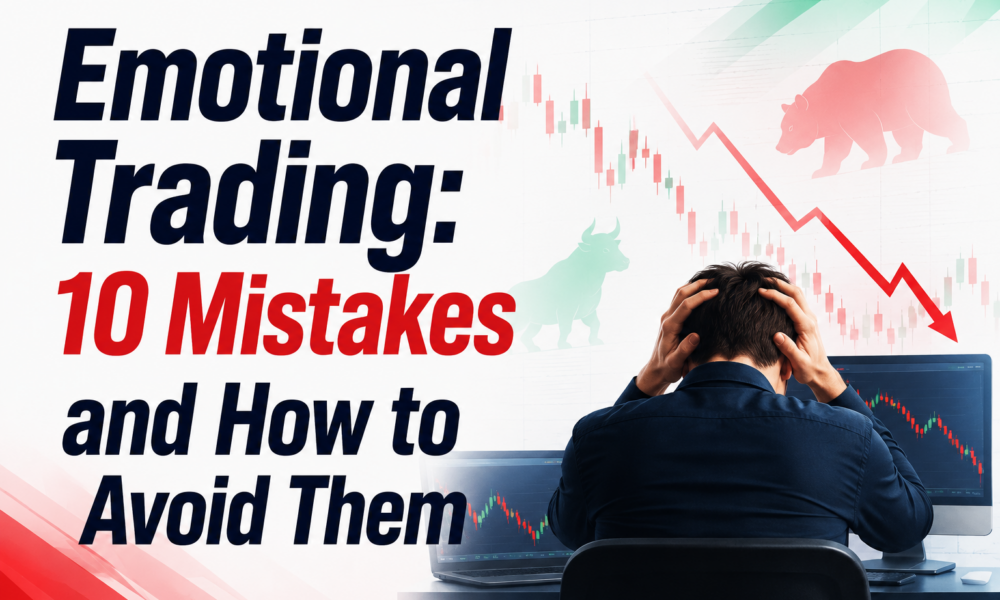
There is a specific kind of stomach drop that happens when a trade you were up nicely on turns red because you didn’t want to sell “too early.” Every trader knows it. That’s emotional trading in a nutshell, and it’s probably cost you more than any bad chart read ever has.
Table Of Content
New traders spend so much time hunting for the perfect indicator or the ideal entry price. Meanwhile, the market doesn’t care about any of that if fear or greed is the one actually pressing the buy button. Below, we’ll go through the emotional trading mistakes that trip up almost everyone starting, why they happen, and what genuinely helps.
What Is Emotional Trading?
Emotional trading is letting a feeling call the shots instead of your plan. Fear, excitement, panic, the urge to get even after a loss – any of these can quietly take over a trade that should’ve been simple.
What makes it hard to catch is that it rarely feels dramatic while it’s happening. It shows up as “I’ll just hold a bit longer” or “one more position won’t hurt.” Small, reasonable-sounding choices. You usually only spot it afterward, once you’re calm again and looking at what you actually did.
Trading psychology matters here because the market is basically built to trigger these reactions. Prices swing, headlines create urgency out of nothing, and your account balance moves in real time right in front of your eyes. Give a human brain that setup, and impulsive decisions practically write themselves.
Why Emotional Trading Happens
Usually, it’s not one thing. It’s a few of these piling up at once.
Fear tends to show up right after a loss, or when the market drops fast. You bail on a decent position too soon because you’re scared of giving back what you already made. Greed does the opposite – it talks you into holding a winner well past the point it made sense to sell, because “it might keep going.”
Then there’s FOMO trading, which basically everyone has fallen for at least once. You watch a stock rip higher, everyone’s posting about it, and you jump in without checking whether it even fits how you normally trade. It was never really about the setup. It was about not wanting to miss out.
Frustration creeps in after a losing streak, and your judgment gets foggy enough that small stuff starts feeling huge. Overconfidence works the opposite angle – a few good trades in a row, and suddenly you’re convinced you’ve figured it all out, so you start ignoring your own rules.
None of this makes you a bad trader. It makes you human. The point was never to switch emotion off completely – just to stop it from grabbing the wheel.
10 Mistakes Traders Make
Some of the most common trading mistakes beginners make – and plenty of veterans still slip on these more often than they’d admit.
- No real plan. Getting into a trade without knowing your exit is like leaving on a road trip with no destination.
- Ignoring your own stop-loss. Talking yourself out of your stop-loss / take-profit levels because “it’ll probably bounce back” turns small losses into painful ones fast.
- Overtrading. Firing off trade after trade just to feel busy rarely improves your results – usually the opposite.
- Revenge trading. Jumping straight back in after a loss, trying to win it back immediately, tends to dig the hole deeper.
- Chasing FOMO trades. Buying purely because everyone’s talking about it, with no real entry and exit strategy, rarely ends well.
- Moving your stop mid-trade. Widening it just so the trade doesn’t hit it defeats the whole point of setting one.
- Sizing trades off emotion. Betting bigger after a win, or bigger to make up for a loss, throws proper position sizing out the window.
- Watching the chart nonstop. Checking the price every thirty seconds does nothing but build anxiety and push you toward exiting too early.
- Treating every market the same. Ignoring market volatility and trading a wild session the same way you’d trade a calm one is asking for trouble.
- Skipping the trading journal. If you’re not writing trades down, you’re stuck repeating the same emotional trading mistakes without ever noticing.
How to Avoid Emotional Trading
Knowing the mistakes is the easy part. Changing them is where people actually get stuck. So here’s how to avoid emotional trading in practice, not just in theory.
Write your plan before you’re in the trade. Entry, stop-loss, target – decide all of it while you’re still calm, because once you’re actually in the position, emotion’s already in the room with you.
Keep a trading journal. Write down why you got in, how you felt, and what happened next. Patterns show up fast once they’re on paper instead of just floating around your head.
Set a hard daily loss limit and actually respect it. Hit it, you’re done for the day. This one habit alone stops most overtrading and revenge trading before either gets a chance to start.
Step away after a big win or a big loss. Both extremes mess with your thinking more than people expect. A short break away from the screen resets you.
Name what you’re feeling, even just to yourself. “I’m anxious right now.” “I really want to chase this.” That small bit of distance is often enough to stop a bad click before it happens, and honestly, that’s most of what trader psychology for beginners comes down to. Not becoming emotionless – just catching the feeling a beat before it becomes a decision you’ll regret.
Trading Discipline Tips
Trading discipline sounds rigid, but really it’s just consistency, over and over, on days you don’t feel like it.
Stick to your own rules, especially in the moment you least want to – that’s usually exactly why the rule exists. Sit down once a week and actually review your trades, not just the profit and loss numbers, but the behavior behind each one. Automate what you can; setting stop-loss and take-profit orders ahead of time removes a chunk of the emotional decision-making right when it matters most. Keep your position sizes boring enough that they don’t make your pulse spike – if they do, they’re too big. And plan around your own trade planning, not around whatever the market’s doing that minute. Set your watchlist the night before, not while prices are already moving.
Building trading discipline isn’t really about willpower. It’s about setting things up so the disciplined choice is also the easy one.
Risk Management Basics
Good risk management is what keeps you around long enough to actually get decent at this.
Start with stop-loss and take-profit orders on every trade, no skipping it. A stop-loss caps how much you can lose, a take-profit locks in a gain before greed talks you into “just a little more.” Watch your risk-reward ratio too – risking $100 to make $50 is bad math, no matter how often you happen to win.
Position sizing gets underrated by almost every beginner. Risk 1-2% of your account per trade, and a losing streak barely touches you. Risk 20%, and one rough week can wipe you out. And keep in mind that market volatility changes how much room a trade needs – a stop that works fine on a quiet day can get triggered instantly during a wild one, so adjust it rather than using the same setting every time.
For solid, official info on market risk and investor protections, the SEC and FINRA both publish free investor education material that’s genuinely worth reading early on.
Conclusion
Emotional trading isn’t some rare flaw a few unlucky traders deal with. It’s something nearly everyone runs into, no matter how long they’ve been doing this. The ones who last aren’t the traders who never feel fear or excitement – they’re the ones who built systems and habits solid enough to stop those feelings from making the call for them.
So pick one thing from this article. A trading journal. A daily loss limit. Whatever feels doable right now. Stick with it for a month before judging it. Loss recovery was never about winning everything back in one trade – it’s about staying in the game long enough for your edge to actually show up.
The market will keep testing your patience. How you handle that is pretty much the whole thing.
FAQS
What is the best way to avoid emotional trading?
Follow a trading plan, not your emotions. Set your entry, stop-loss, and target before entering a trade. Avoid revenge trading, chasing prices, and making impulsive decisions. Discipline is your biggest advantage.
How to avoid mistakes in trading?
Use a clear strategy, manage your risk, always place a stop-loss, and avoid trading based on tips or emotions. Review your trades regularly and learn from your mistakes.
What is the 3-5-7 rule of trading?
The 3-5-7 rule is a risk management guideline:
3%: Risk no more than 3% on one trade.
5%: Limit daily losses to 5%.
7%: Avoid putting over 7% of your capital into one trade.
Is trading 90% psychology?
Psychology plays a major role in trading. A good strategy matters, but discipline, patience, and emotional control often determine long-term success.