




WhatsApp Investment Scam: How Telegram and Trading Frauds Work in India
If you trade in the stock market or even casually follow finance news, chances are someone has added you to a WhatsApp or Telegram group promising “sure-shot” stock tips. Most of these...

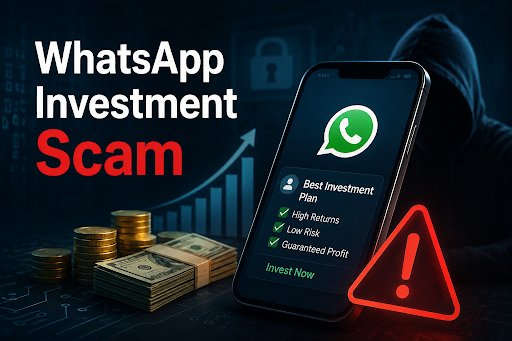
If you trade in the stock market or even casually follow finance news, chances are someone has added you to a WhatsApp or Telegram group promising “sure-shot” stock tips. Most of these groups are not run by genuine analysts. Fraudsters run them, and the losses can run into lakhs within days.
Table Of Content
- What is a WhatsApp Investment Scam?
- How WhatsApp and Telegram Trading Scams Work
- Common Types of Trading Scams
- Red Flags of a Fake Trading Group
- How to Verify a Broker or Investment Adviser
- What to Do After a Scam
- Are WhatsApp Stock Market Groups Safe?
- Official Sources and Reporting Links
- Conclusion
- FAQS
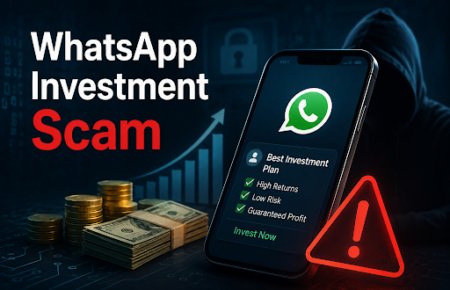
A typical WhatsApp investment scam starts small: a friendly message, a professional-looking group, a few screenshots of “profits.” Then comes the pitch: guaranteed returns, fake stock tips, a trading app you have never heard of, or an “adviser” who claims SEBI registration. This article walks you through how these scams actually work, the warning signs to watch for, and where to report them if you have already lost money.
What is a WhatsApp Investment Scam?
A WhatsApp investment scam is a fraud where scammers use messaging apps to pose as stock market experts, brokers, or investment advisers. They rarely look unprofessional. Most groups have a logo, a description mentioning “SEBI-registered” credentials, and admins using photos borrowed from real analysts or finance influencers.
To build trust quickly, scammers add fabricated profit screenshots, fake testimonials from “existing members,” and sometimes bots that post positive messages throughout the day. The same playbook is used almost identically in a Telegram investment scam; the platform changes, but the psychological tactics stay the same.
How WhatsApp and Telegram Trading Scams Work
These scams usually follow a predictable sequence rather than happening randomly. Understanding the flow makes it much easier to spot one early:
- A sponsored ad or unsolicited message reaches you.
- You are invited to a WhatsApp or Telegram group.
- A “fake expert” posts convincing testimonials and success stories.
- Free stock tips or a paid “trading course” are offered.
- You are directed to a fake app or website to start trading.
- You make a small initial deposit.
- The app shows artificial profits to build confidence.
- You are pushed to deposit a much larger amount.
- When you try to withdraw, the platform blocks it.
- Additional “fees” are demanded to release your own money.
The Indian Cyber Crime Coordination Centre (I4C) has specifically flagged this pattern in its advisory on online investment fraud, warning citizens about sponsored advertisements, deepfake videos or images of market experts, impersonation of well-known financial institutions, and fake investment applications used to collect money.
Common Types of Trading Scams
Guaranteed-Return Groups
- This is the most common bait.
- A WhatsApp group promising guaranteed returns will use lines like “risk-free profit,” “fixed monthly income,” or “90% accuracy.”
- No legitimate market participant can guarantee stock market returns; markets simply don’t work that way. Understanding the [risk-return ratio] can also help investors judge whether a promised return is realistic or simply a scam.
Fake Stock-Tip and Inside-Information Scams
- Here, a self-styled “expert” claims access to secret or insider information, operator-backed shares, upcoming multibagger stocks, or trades that will “definitely hit upper circuit.”
- This is a classic WhatsApp stock market scam format, designed to make you feel like you’re getting privileged access others don’t have.
Fake Expert and Impersonation Scams
- Scammers frequently copy the name, photograph, logo, and even fabricated registration number of a real broker, research analyst, or SEBI official.
- Seeing a familiar name or face doesn’t confirm authenticity; it’s often lifted directly from a genuine person’s public profile.
Fake Trading Apps and APK Files
- A fake trading app scam usually involves an app downloaded outside the Play Store or App Store, often as an APK file shared in the group.
- The app’s dashboard may show your “portfolio” growing steadily, but that number exists only on screen; the actual money has already moved to the scammer’s account.
- If you have encountered one, it’s worth knowing how to report a fake trading app in India, which we cover in the reporting section below.
Withdrawal-Fee Scams
- Once you try to withdraw funds, the platform suddenly demands GST, “tax,” account-unblocking charges, processing fees, or a security deposit.
- Each payment leads to another excuse, and the withdrawal never actually happens.
Pump-and-Dump and Fake IPO Schemes
- Some groups promote illiquid, low-volume shares, often targeting companies with low market capitalization, and push members to buy in bulk to inflate the price artificially before the operators sell off their holdings.
- Others circulate fake IPO allotment offers claiming guaranteed listing gains, only to disappear once payments are collected.
Red Flags of a Fake Trading Group
Watch for these signs in any WhatsApp investment group or Telegram trading scam:
- Guaranteed or fixed returns on trading.
- Pressure to deposit money immediately.
- Payment requests to personal bank accounts or unrelated UPI IDs.
- Unverified APK files or shortened links.
- Suspiciously polished profit screenshots.
- Group admins with no verifiable identity.
- Requests for your OTP, password, or UPI PIN.
- Requests for screen-sharing or remote-access apps.
- Withdrawals blocked until you pay “more fees.”
- SEBI registration numbers that can’t be verified independently.
- Claims of “exclusive” or “secret” market access.
How to Verify a Broker or Investment Adviser
Before trusting anyone in a trading group, take these steps:
- Ask for the entity’s full legal name and SEBI registration number.
- Cross-check these details directly on SEBI’s official website, never through a link shared in the group.
- Confirm that the phone number, website, address, and email all match official records.
- Download trading apps only from the broker’s official website or a recognised app store.
- Never transfer money to a personal bank account or an unfamiliar UPI ID.
- Contact the broker only through independently verified contact details, not numbers shared by the group admin.
- Don’t rely on certificates, screenshots or links sent inside the chat as proof.
If you are wondering how to check if a Telegram stock market group is genuine, remember this: the group itself proves nothing. Membership numbers, admin titles or “verified” badges inside a chat app don’t confirm that the person giving advice is authorised. Only independent verification through SEBI’s official channels can do that.
What to Do After a Scam
If you’ve already sent money, acting fast matters more than anything else. Here’s an emergency checklist for what to do after losing money in a WhatsApp investment scam:
- Stop all communication with the scammer and do not send further payments.
- Call the Cybercrime Helpline 1930 immediately; this is the dedicated cybercrime helpline 1930 for investment fraud cases.
- File a report on the National Cyber Crime Reporting Portal at cybercrime.gov.in.
- Inform your bank, broker, wallet provider, or UPI app about the fraudulent transaction.
- Save all evidence, screenshots, chat history, phone numbers, URLs, UPI IDs and transaction IDs.
- Change your passwords and revoke any remote-access permissions you may have granted.
- Report and exit the group or channel on WhatsApp or Telegram.
- If an unregistered entity offered securities-market services, consider filing a complaint with SEBI as well.
This also covers how to report a Telegram trading scam, since the reporting process is the same regardless of which app the fraud originated on. Quick reporting can help authorities and payment providers act faster, and in some cases assist in tracing or freezing mule bank accounts used in the fraud.
However, there’s no way to know in advance how to recover money from an online trading scam with certainty; recovery depends on how quickly funds are traced and whether they can still be intercepted, so no outcome can be guaranteed.
Are WhatsApp Stock Market Groups Safe?
- Not every WhatsApp or Telegram group is fraudulent; some are run by genuine SEBI-registered advisers or research analysts who use these platforms simply for convenience.
- But an unfamiliar group shouldn’t be treated as trustworthy just because it has thousands of members, impressive-looking screenshots, or testimonials from other “members.”
- The safest approach is to treat every unsolicited investment group with caution until you have independently verified the adviser’s registration, the broker’s legitimacy, and the platform’s payment details through official sources, not through anything shared inside the chat itself.
Official Sources and Reporting Links
| Purpose | Official Source |
| SEBI scam advisories | SEBI Investor (investor.sebi.gov.in) |
| Verify registered intermediaries | SEBI official website |
| Report cyber fraud | cybercrime.gov.in |
| Financial cybercrime helpline | 1930 — the official National Cyber Crime Helpline. |
| Report unauthorised financial activity | RBI Sachet Portal |
| Report spam messages | TRAI or Sanchar Saathi |
Conclusion
No genuine broker, adviser or trading platform can guarantee stock market profits; that promise alone should end the conversation. Be equally cautious of unsolicited stock tips, unfamiliar apps, and anyone asking you to pay before you can withdraw your own money.
Every WhatsApp investment scam relies on urgency and false trust, so verify first, invest later, and report quickly if something goes wrong.
FAQS
Is there a scam going on with WhatsApp?
Yes. Fraud groups run WhatsApp investment scams and stock-tip traps, plus “digital arrest” and fake job scams. Scammers pose as officials or experts, build trust, then ask for money. Stay alert with unknown numbers.
What is the latest scam on WhatsApp?
Right now, “digital arrest” scams are big; fraudsters pretend to be police or judges and threaten arrest to extort money. Fake trading groups running a Telegram trading scam-style pitch are also active. Never panic-pay anyone.
What is the WhatsApp scam that asks for money?
Usually it’s a WhatsApp stock market scam group. They show fake profits, ask for a “deposit,” then block withdrawal until you pay more “fees.” Genuine brokers never ask for personal UPI transfers.
How does the WhatsApp scam work?
You get added to a group, see fake tips and testimonials, deposit a little money first, see fake profits, then get pushed for bigger deposits. Withdrawal gets blocked. Classic fake trading app scam pattern; verify before you trust.