




What is a GTT Order? (Good Till Triggered Order Explained)
If you have ever missed a great entry price because you were stuck in a meeting, a GTT order might be your new best friend. GTT stands for Good Till Triggered. It lets you set an order today that...

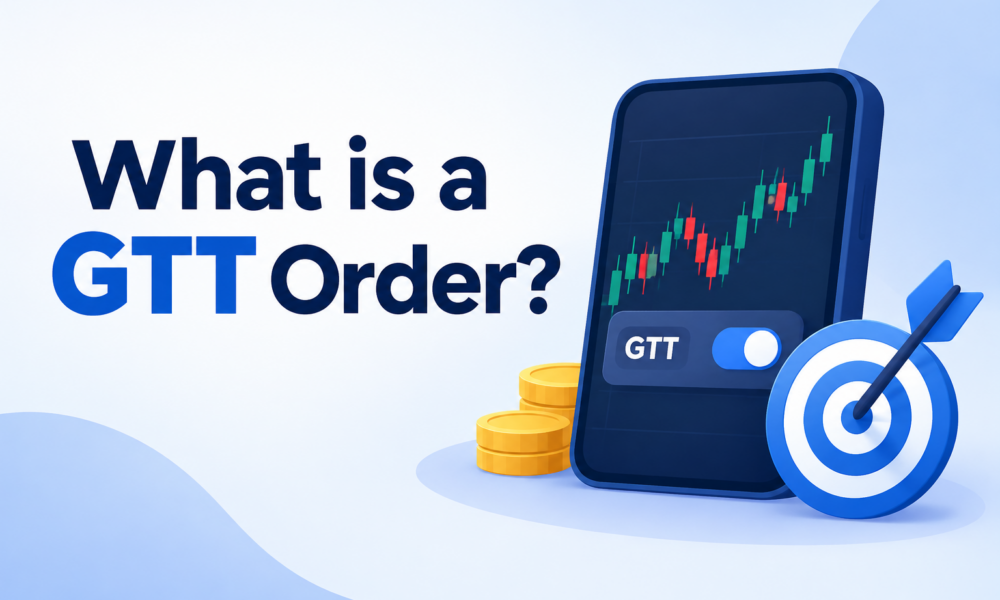
If you have ever missed a great entry price because you were stuck in a meeting, a GTT order might be your new best friend. GTT stands for Good Till Triggered. It lets you set an order today that only executes when the market reaches your specified price, days or even months later.
Table Of Content
For Indian traders and investors juggling work, family, and everything else, this one feature can quietly do a lot of heavy lifting.
GTT Order Meaning
A GTT (Good Till Triggered) order is an instruction you give your broker to buy or sell a stock when it reaches a specific price. For example, if a stock is trading at ₹560 and you want to buy it only if it falls to ₹500, you can place a GTT order with a trigger price of ₹500 instead of monitoring the market all day.
The key difference is that a GTT order does not immediately enter the exchange order book. It remains pending on your broker’s system until the trigger price is reached. Once triggered, the broker places a fresh order on the exchange on your behalf.
How Does a GTT Order Work?
Wondering how a GTT order works in practice? It’s quite simple.
- First, you set your trigger price, choose whether it’s a buy or sell order, and decide whether it should be placed as a limit or market order.
- Once set, the instruction remains active on your broker’s server and continuously tracks the market. When the last traded price (LTP) reaches your trigger price, the broker automatically sends the order to the exchange for execution.
- GTT orders generally remain valid for up to one year, although the exact validity period can vary from one broker to another.
- The best part is that you can modify or cancel the order anytime before it is triggered, giving you complete control even while the order is waiting on the broker’s server.
GTT Order vs Normal Limit or Stop-Loss Order
Here’s where the difference between a GTT order and a limit order becomes important. A regular limit order usually expires at the end of the trading day if it isn’t executed. A GTT order, however, can remain active for weeks or even months until it is triggered or cancelled. GTT orders can also be used for stop-losses, allowing you to set a long-term exit level without having to monitor your position every day.
Benefits of Using GTT Orders
The GTT order benefits are genuinely useful for everyday investors:
- Automates your entry or exit at exactly the price you want.
- Saves time since you don’t need to track the market constantly.
- Works brilliantly for long-term investors and part-time traders juggling a day job.
- Encourages discipline by locking in your target price and stop-loss using GTT in advance.
Things to Keep in Mind (Risks & Limitations)
Before you get too excited, a few GTT order risks deserve your attention:
- A GTT order is a broker-provided feature, not an order type guaranteed by the stock exchange.
- Because it depends on the last traded price, sudden price gaps or highly volatile market openings can cause your trigger to be missed.
- The validity period and the number of GTT orders you can place may also vary between brokers such as Zerodha, Groww, and Angel One.
- That’s why it’s a good idea to review your pending GTT orders regularly and update them when needed, rather than setting them and forgetting about them.
Who Should Use GTT Orders?
- Busy professionals — who can’t monitor the market throughout the day.
- Long-term investors — who prefer predefined entry and exit levels.
- Beginners — who want to build disciplined trading habits without constantly watching price charts.
Final Thoughts
At the end of the day, GTT (Good Till Triggered) is simply a tool designed to make trading more convenient and disciplined. It won’t guarantee profits or help you choose winning stocks. Instead, it helps you stick to your trading plan by automatically placing an order when your chosen price is reached.
Before using GTT for the first time, take a few minutes to check your broker’s rules. Validity, price limits, and how GTT orders work can vary from one platform to another.