




What is a Mutual Fund?
So, what is a mutual fund really? In simple terms, it’s a pooled investment: a bunch of people put money into one basket, and that money gets invested in stocks, bonds, or other assets by...

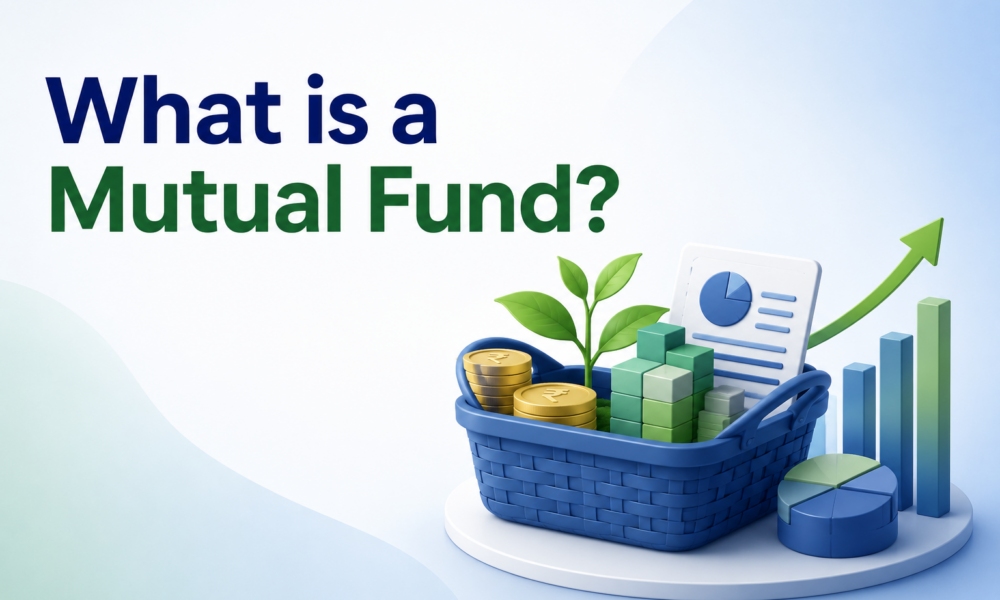
So, what is a mutual fund really? In simple terms, it’s a pooled investment: a bunch of people put money into one basket, and that money gets invested in stocks, bonds, or other assets by someone who does this for a living. You don’t have to know how to read a balance sheet or track quarterly earnings. Someone else handles that part.
That “someone else” works at an asset management company, and their job title is fund manager. They decide what goes into the fund and when to buy or sell. Your job, as an investor, is really just to pick a fund that fits what you’re trying to do with your money.
You will also come across the term NAV, or net asset value. Think of it as the price tag on one unit of the fund; it changes daily depending on how the fund’s holdings are performing.
Why invest in mutual funds?
Honestly, most of us don’t have the time or expertise to build an investment portfolio from scratch. That is the real appeal here: You’re handing that work to someone whose full-time job is managing money.
A few reasons people lean toward mutual funds:
- You get portfolio diversification without needing a huge amount of capital upfront.
- Through a mutual fund SIP, you can invest a small fixed amount every month instead of scraping together a lump sum.
- There is no need to personally research every stock or bond; the fund manager handles that.
- SEBI regulates these funds, so there is a decent layer of oversight and disclosure.
- You can pick funds based on how much risk you actually feel comfortable with.
Types of mutual funds
This is where a lot of beginners get confused, so let’s break it down properly. Mutual funds are usually classified in two ways: by what they invest in, and by how you can buy or exit them.
By asset class, the main types are:
- Equity mutual funds — Mostly stocks, higher growth potential, but expect more ups and downs along the way.
- Debt mutual funds — Mostly bonds and fixed-income instruments, generally steadier but slower growing.
- Hybrid funds — A mix of equity and debt, aiming for a middle-ground risk-return profile.
- Index funds — These simply track a market index like the Nifty 50, with less active decision-making involved.
By structure, funds are either open-ended, meaning you can buy or sell units on pretty much any business day, or closed-ended, where your money is locked in for a fixed period.
There’s one more distinction worth knowing: direct vs regular mutual funds. A direct plan is bought straight from the fund house, so there’s no distributor commission built in, which means a lower expense ratio. A regular plan comes through an advisor or platform, and that convenience costs a bit more each year. Over 15 years or so, even a 1% gap in expense ratio can quietly eat into your mutual fund returns more than people expect.
On taxes, gains from equity mutual funds held over a year fall under long-term capital gains, taxed differently than if you sell within a year. Debt funds have their own, somewhat less friendly tax treatment, and since these rules do get revised, it’s worth checking current numbers before investing.
One quick tip before picking a fund: look past recent returns. Check the fund manager’s track record, the expense ratio, and whether the portfolio is too concentrated in a handful of stocks.