




Stop Loss Mistakes Beginners Make: 5 Common Errors and How to Fix Them
Most beginners don’t lose money because they pick the wrong stock. They lose money because they make stop loss mistakes beginners make when managing exits. A stop loss can help limit losses,...

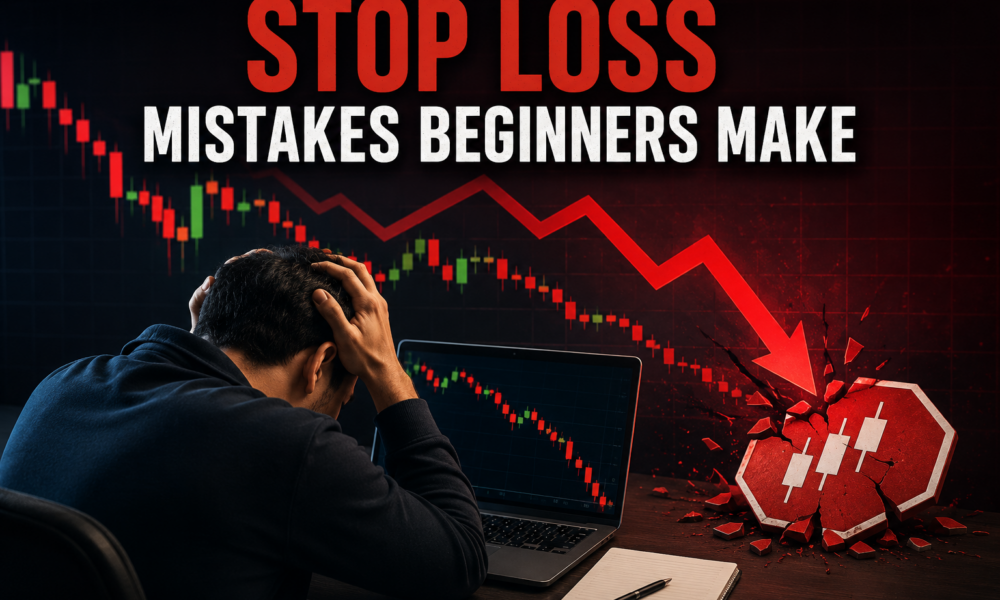
Most beginners don’t lose money because they pick the wrong stock. They lose money because they make stop loss mistakes beginners make when managing exits. A stop loss can help limit losses, but when it is used the wrong way, it can drain your account just as fast as having no protection at all.
Table Of Content
In this blog, we will walk through the stop loss mistakes beginners make most often, why they happen, and exactly how to fix them. By the end, you will know how to set a stop loss that actually works for you instead of against you.
What Is a Stop Loss Order?
A stop loss is an instruction you give your broker to automatically sell (or buy back) a position once the price hits a certain level. Think of it as a safety net. You set it once, and it does its job even if you’re not watching your screen.
Say you buy a stock at ₹100. You set a stop loss at ₹95. If the price drops to ₹95, your position closes automatically. You lose ₹5 per share instead of waiting around and losing ₹20 or more.
Why do traders use stop loss?
The main reason is simple: it removes emotion from the exit decision. When a trade goes against you, your brain wants to hope, wait, and pray for a recovery. A stop loss makes that decision for you in advance, while you’re still thinking clearly.
It also protects your capital so you can keep trading another day. Professional traders don’t avoid losses entirely. They just make sure no single loss is big enough to wipe them out.
Stop Loss Order vs Stop-Limit Order
A regular stop loss order, often called a stop-market order, triggers a market sell once your price is hit. It guarantees an exit, but not a guaranteed price, especially during fast-moving markets.
In fast-moving markets, the actual execution price may differ from the stop price because of slippage or price gaps.
A stop-limit order is slightly different. It triggers a limit order instead of a market order, meaning it will only sell at your specified price or better. The catch is that if the market moves too fast, your order might not fill at all. Understanding this difference is the first step toward smarter stop losses for beginners.
How to Avoid Stop Loss Mistakes Beginners Make
Mistake 1: Not Using a Stop Loss
This is the most common and the most costly of all the stop loss mistakes beginners make. Some new traders skip the stop loss entirely because they believe the price will “come back eventually.”
Why is this risky
Without a stop loss, a small loss can quietly turn into a massive one. There’s no safety net catching you, so the only thing standing between you and a huge drawdown is hope, and hope is not a strategy.
Simple example for beginners
Imagine you buy a stock at ₹500 without setting a stop loss. The stock drops to ₹400, then ₹300. You keep holding because you don’t want to “book a loss.” Six months later, it’s at ₹250, and your capital is tied up in a losing position that you could have exited early at a much smaller loss.
Actionable tip: Always place your stop loss the moment you enter a trade, not after. If you can’t define your exit before you enter, you’re not ready to take the trade.
Mistake 2: Setting the Stop Too Tight
A tight stop loss feels safe, but it often backfires. Market volatility and market noise can easily trigger a stop that is placed too close. This is one of the more frustrating mistakes when setting stop losses because traders end up getting stopped out right before the price moves in their favor.
Market noise and volatility
Prices rarely move in a straight line. They wiggle up and down throughout the day due to normal market volatility, even when the overall trend is healthy. This natural back-and-forth movement is often called market noise.
If your stop loss sits too close to your entry price, normal noise can trigger it before your trade has a real chance to work.
Why traders get stopped out early
Let’s say you buy a stock at ₹200 and place your stop loss at ₹198, just 1% away. The stock dips to ₹197 during normal volatility, hits your stop, and then climbs to ₹220 an hour later. You were right about the direction, but your stop was too tight to survive the noise.
Actionable tip: Give your stop loss enough room based on the stock’s recent price swings, not just a fixed small number that feels comfortable.
Mistake 3: Setting the Stop Too Wide
On the flip side, a stop loss that’s too wide creates its own problems. This can hurt risk management and position sizing. This is one of the common stop loss mistakes beginners make that quietly destroys account balances over time.
How it affects risk management
Risk management means controlling how much money you can lose on any single trade. When your stop is too far from your entry, you’re risking a much bigger chunk of your capital than you realize, even if the trade looks “safe” on the surface.
Position sizing problem
Position sizing is how many shares or contracts you buy based on your risk tolerance. A wide stop loss forces you to either risk too much money or buy fewer shares, which can make profitable trades feel pointless.
For example, if you’re willing to risk ₹2,000 on a trade and your stop loss is ₹40 away from your entry, you can only buy 50 shares. If your stop loss were ₹10 away instead, you could buy 200 shares with the same risk, giving you more upside on a winning trade.
Actionable tip: Decide your risk per trade first, then calculate your position size based on your stop loss distance, not the other way around.
Mistake 4: Moving the Stop After Entry
This mistake is less about strategy and more about psychology. It happens when a trader sets a reasonable stop loss, then moves it further away the moment the trade starts going wrong.
Emotional decision-making
When a position is losing money, your brain naturally wants to avoid that loss becoming real. Moving the stop loss further away feels like giving the trade “more room,” but it’s really just delaying the pain and making it bigger.
Why discipline matters
Imagine you buy a stock at ₹150 with a stop loss at ₹140. The price drops to ₹141, and instead of letting your stop do its job, you move it down to ₹120 “just in case.” The stock then falls to ₹110, and your small planned loss has turned into a large unplanned one.
Actionable tip: Treat your stop loss as a rule, not a suggestion. If you want to adjust it, only move it in your favor to lock in profit; never further away to avoid a loss.
Mistake 5: Ignoring Market Structure and Support/Resistance
Many beginners place their stop loss at a random distance, like a fixed percentage, without looking at the actual chart. This is a common problem in support and resistance stop loss placement. This is one of the more avoidable mistakes when setting a stop loss.
Support and resistance levels
Support is a price level where a stock has historically stopped falling and bounced back up. Resistance is the opposite, a level where it has struggled to rise further. These levels matter because other traders are watching them too, which makes them more likely to hold.
Better placement using chart context
If a stock has strong support at ₹480, placing your stop loss at ₹479 gives the trade room to breathe near a level that’s likely to hold. Placing it at ₹495, right in the middle of normal price action, ignores that structure completely and increases your odds of getting stopped out for no good reason.
Actionable tip: Before setting your stop, look at the chart and identify the nearest support or resistance level. Place your stop just beyond it, not at a random round number.
How to Set a Stop Loss for Beginners
Now that we’ve covered the mistakes, let’s talk about how to set stop loss correctly so it actually works in your favor.
Use risk per trade
Decide upfront how much of your account you’re willing to risk on a single trade, typically 1–2% for beginners. This single habit prevents most of the damage caused by poor stop loss placement.
Match stop loss with volatility
A volatile stock needs more breathing room than a calm, steady one. Look at how much the stock typically moves in a day before deciding how far your stop loss should sit from your entry.
Consider a trailing stop when needed
A trailing stop is a stop loss that automatically moves up as the price rises, locking in profit while still protecting you from a reversal. It’s one useful option for stop loss strategies for beginners who want to ride a trend without watching the screen all day.
For example, if you buy a stock at ₹100 with a 5% trailing stop, and the price rises to ₹150, your stop loss automatically adjusts to ₹142.50, protecting most of your gains.
FAQs
What is the best stop loss strategy for beginners?
The best approach is combining a fixed risk percentage (1–2% of your account) with stop placement based on support and resistance levels. This keeps your losses small while giving the trade enough room to work with real market structure instead of a random number.
Where should beginners place a stop loss?
Place your stop loss just beyond a clear support level if you’re buying, or just beyond resistance if you’re shorting. Avoid placing it at obvious round numbers, since many traders cluster their stops there, making those levels easier to trigger.
Why does stop loss keep getting hit?
This usually happens when the stop is placed too close to the entry price, ignoring normal market volatility. It can also happen when the stop sits right at a popular round number instead of being placed thoughtfully beyond real support or resistance.
What is the difference between stop-market and stop-limit orders?
A stop-market order guarantees you exit the trade but not at a specific price, since it triggers a market sell. A stop-limit order guarantees a price but not an exit, since it may not fill if the market moves too quickly past your limit.
Conclusion
The stop loss mistakes beginners make all come from the same root problem: treating the stop loss as an afterthought instead of part of the trading plan. Skipping it entirely, setting it too tight, setting it too wide, moving it out of fear, or ignoring the chart’s structure can all turn a manageable loss into a painful one.
The fix isn’t complicated. Decide your risk per trade before you enter, place your stop based on real support and resistance, give it room to handle normal volatility, and don’t touch it once it’s set unless you’re locking in profit. Master these basics, and your stop loss will finally do what it was always meant to do: protect you.