




9 SME IPO Risks to Know Before You Invest
Imagine an SME IPO opens for subscription and investors cover it many times over. Screenshots of listing day gains flood your WhatsApp groups. You want in, but the application amount feels much...

Imagine an SME IPO opens for subscription and investors cover it many times over. Screenshots of listing day gains flood your WhatsApp groups. You want in, but the application amount feels much bigger than a normal retail IPO.
Table Of Content
Before you click apply, ask yourself a few things.
- What happens if the stock lists below the issue price?
- Can you actually sell your shares whenever you want?
- Why do some SME stocks jump or crash so sharply right after listing?
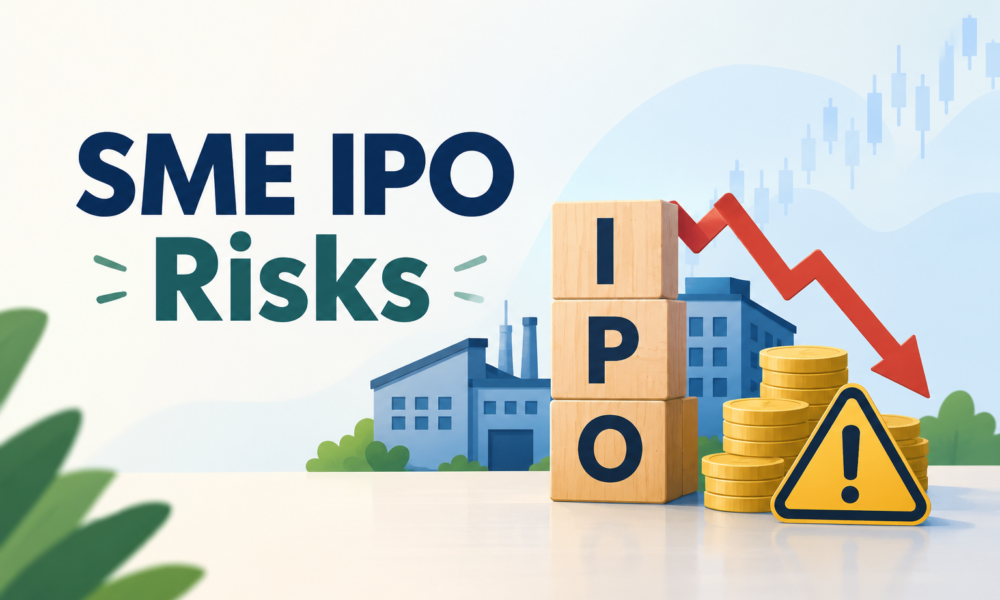
SME IPOs can offer real growth opportunities. Smaller companies sometimes turn into big success stories. Understanding the SME IPO risks is important before you decide to apply.
What Is an SME IPO?
An SME IPO is how a small or medium-sized company raises money from the public for the first time. Once the issue closes, the company lists on a dedicated SME platform. This is usually NSE Emerge or BSE SME, not the main board.
These companies are generally much smaller than the names you see on the Nifty or Sensex.
People often use the money raised for
- Business expansion
- Working capital
- Repaying debt
- Funding an acquisition
- Other purposes in the offer document
When you apply, you are not buying a stock. You’re checking the company’s business model. You’re looking at management, financial health, and growth plans.
This does not mean every SME IPO is a bad idea. Smaller size and fewer shares for public trading raise risks in SME IPOs. Lower trading activity and a shorter track record add to these risks. These SME IPO risks can often be higher than those of many mainboard IPOs.
SME IPO vs Mainboard IPO: Key Differences
Here is a simple side-by-side comparison
| Factor | SME IPO | Mainboard IPO |
| Company size | Generally smaller businesses | Usually larger, more established companies |
| Listing platform | NSE Emerge or BSE SME | BSE mainboard |
| Trading activity | May be lower | Usually higher |
| Least investment | Can be higher | Generally more accessible to retail investors |
| Public information | May be more limited | Usually wider analyst and media coverage |
| Price movement | Can be sharper | Often comparatively more liquid |
| Exit flexibility | May be limited by low demand | Generally easier with actively traded shares |
This SME IPO vs. mainboard IPO comparison is a broad guide, not a rule. Some SME companies are well run and well disclosed. But the structure of the SME segment itself calls for extra homework before you invest.
SME IPO Risks in India
Understanding SME IPO risks in India means looking beyond subscription numbers and expected listing gains. The main risks investors should understand are:
1. Low Liquidity and Exit Risk
SME shares may have fewer buyers and sellers than mainboard stocks. This can make it difficult to sell your shares quickly, especially when the stock is falling.
Trading volume may remain low, and the bid-ask spread can be wider. A stock can also hit a lower circuit, where there may be many sellers but very few buyers.
Why it matters: You may want to exit your investment but may not find a buyer at your preferred price.
2. High Price Volatility
SME stocks can experience sharp price movements because of lower trading activity, fewer publicly available shares, and changing investor sentiment.
A stock may rise or fall significantly in a short period.
Why it matters: Your investment value can change quickly, even without a major change in the company’s business.
3. Limited Financial History and Business Risk
Some SME companies have a shorter operating history than larger listed companies. They may also depend heavily on a few customers, suppliers, products, or geographic markets.
Before applying, check:
- Revenue growth
- Profit margins
- Cash flow from operations
- Debt levels
- Working capital requirements
- Customer concentration
- Contingent liabilities
Why it matters: A business with a limited track record can be harder to evaluate, and a problem with one major customer or supplier can have a larger impact.
4. Limited Disclosures and Analyst Coverage
Large companies are generally followed by more analysts, brokers, and financial media. SME companies may receive less coverage.
This can make it harder to compare the company’s valuation, understand industry risks, and track its performance.
Why it matters: You may need to do more independent research instead of relying on readily available market commentary.
5. Valuation Risk
A heavily subscribed SME IPO is not automatically fairly valued.
Investor excitement can push demand higher, but the issue price still needs to be assessed against the company’s earnings, growth, cash flow, and comparable companies.
Why it matters: If you pay too much for a business, even good future growth may not translate into attractive returns.
6. Promoter and Governance Risk
The promoter’s background and track record are important when evaluating an SME.
Check:
- Promoter shareholding
- Share pledging
- Related party transactions
- Pending litigation
- Auditor qualifications or resignations
- Use of IPO proceeds
Also check whether the issue is mainly a fresh issue or an offer for sale.
Why it matters: Governance problems can affect the company’s financial health and investor confidence.
7. Business Concentration Risk
Some SMEs depend heavily on one or two customers, a single product, one supplier, one geographic region, or a small management team.
If an important customer leaves or demand for the main product falls, the company’s revenue and profits could be affected significantly.
Why it matters: A concentrated business may have fewer ways to absorb an unexpected shock.
8. Market Manipulation and Speculation Risk
Low trading volumes and limited public shareholding can sometimes contribute to unusual price movements.
Be cautious about:
- Sudden price spikes without clear business news
- Heavy social media promotion
- Repeated upper circuits
- Guaranteed-return claims
- Sharp price movements despite weak fundamentals
Price movement alone does not prove market manipulation. However, unusual activity is a reason to investigate further.
Why it matters: Following hype instead of company fundamentals can expose investors to unnecessary losses.
9. Higher Investment Amount and Concentration Risk
SME IPOs can require a larger minimum investment than typical mainboard retail IPO applications.
Putting a large amount into one company means more of your money is exposed to the performance of a single business.
Why it matters: If the stock falls or becomes difficult to sell, the financial impact can be larger.
Never use emergency savings or borrowed money to apply for an SME IPO.
What Happens After Listing?
Investors still face risks after shares are allotted in SME IPOs. A stock can list below the issue price. Trading volume can shrink once the initial excitement fades. Prices can hit upper or lower circuits, making it hard to exit at your preferred level.
Quarterly results may disappoint. The company might need more capital later, which can dilute existing shareholders. You may end up holding shares far longer than planned.
Remember, a listing gain is only a gain on paper until you actually sell. Post-listing performance over several quarters reveals more about the business than just the first day’s trading.
How to Evaluate an SME IPO Before Applying
Business checks
- What does the company actually sell, and is it easy to understand?
- How big is the addressable market?
- Does it have repeat customers, or is revenue tied to one client?
Financial checks
- Has revenue grown consistently?
- Are profits backed by real operating cash flow?
- Is debt rising, and are margins stable?
Valuation checks
- What is the price-to-earnings ratio compared to fair peers?
- Are the earnings sustainable?
- Is the issue price justified by the fundamentals?
Management and governance checks
- Who are the promoters, and what is their track record?
- Are there related party transactions or pending disputes?
- Is the offer mostly a fresh issue or an offer for sale?
Trading and exit checks
- What trading volume can you realistically expect?
- Can you hold this investment for a few years if needed?
- What is your plan if the stock hits a lower circuit?
It also helps investors identify SME IPO investment risks before committing their money.
Common Myths About SME IPOs
Myth 1: High subscription means low risk. Reality: Heavy demand can simply reflect limited supply and speculation, not business strength.
Myth 2: Every SME IPO gives listing gains. Reality: Some list below the issue price, and even a premium listing can fade quickly.
Myth 3: A market maker guarantees an exit. Reality: A market maker boosts liquidity by following specific rules. However, it doesn’t guarantee a quick sale at your chosen price.
Myth 4: SME stocks suit every beginner. Reality: They need more research. You also need to handle bigger price swings than with regular mainboard stocks.
Myth 5: SEBI approval means guaranteed returns. Reality: SEBI regulations focus on disclosure and process. They do not control business outcomes or share price performance.
So, are SME IPOs safe? They aren’t unsafe by nature. However, they need more caution and research than a typical mainboard application.
When Should Investors Be Cautious?
These SME IPO risks become especially important when you are investing a large amount of money in a single issue.
- You are applying only because of social media buzz
- You have not read the offer document
- Cash flow looks weak or inconsistent
- A large chunk of the issue is an offer for sale
- The business relies on one customer or region
- Valuation looks stretched against comparable companies
- Promoter or auditor red flags show up in the filings
- You may need this money again soon
- You are using borrowed funds to apply
- You cannot handle a sharp price fall or a long wait to exit
Practical Checklist Before Applying
- Do I understand the business model?
- Have I read the DRHP or offer document?
- Have I checked revenue, profit, debt, and cash flow?
- Have I compared the valuation with the right peers?
- Do I know the smallest investment amount required?
- Can I stay invested if liquidity turns low?
- Am I using only surplus money, not essential savings?
- Is this a reasonable part of my portfolio
- Am I relying on facts, not rumors or tips?
- Do I understand the exit risk involved here?
Quick Recap
SME IPO risks should be understood before applying, even when an issue appears attractive.
- Low liquidity can make buying and selling difficult
- Price volatility can be sharper than expected
- Smaller businesses often carry a limited history and higher concentration risk
- Thin analyst coverage makes independent research more important
- High valuations can shrink future returns
- Promoter, governance, and disclosure checks matter as much as the numbers
- Strong subscription or a listing pop does not guarantee long-term success
- Never use borrowed money or emergency funds for a speculative IPO
Understanding SME IPO risks in India also means looking at liquidity, valuation, governance, and business concentration.
An SME IPO should focus on three key factors:
- Business quality.
- Fair valuation.
- Managing liquidity and volatility
Frequently Asked Questions
1. Are SME IPOs safe for beginner investors?
Not exactly “safe” in the way a fixed deposit is safe. SME IPOs have more liquidity risk. They experience bigger price swings. Plus, there is less analyst coverage compared to mainboard IPOs. Understanding the risks of investing in SME IPOs can help beginners decide whether they are comfortable with this type of investment.
2. What is the minimum investment amount for an SME IPO?
SME IPO lot sizes are usually larger than those for regular retail IPOs. The minimum application can be over a lakh. This depends on the price band and lot size for each issue. This amount changes with each issue. So, always check the IPO’s offer document before you apply.
3. Can I sell SME IPO shares immediately after listing?
You can place a sell order on listing day, but whether it actually executes depends on demand. Low trading volume and wide bid-ask spreads are common in SME stocks. This means you might not find a buyer at your desired price quickly.
4. How does SME IPO vs mainboard IPO compare?
The biggest differences between an SME IPO vs mainboard IPO are company size, listing platform, trading activity, and liquidity.