


Primary Market vs Secondary Market: Key Differences
You apply for shares in an IPO and receive 20 shares. A few days later, those shares appear on the stock exchange. When you sell them to another investor, are you still dealing with the company? Not...

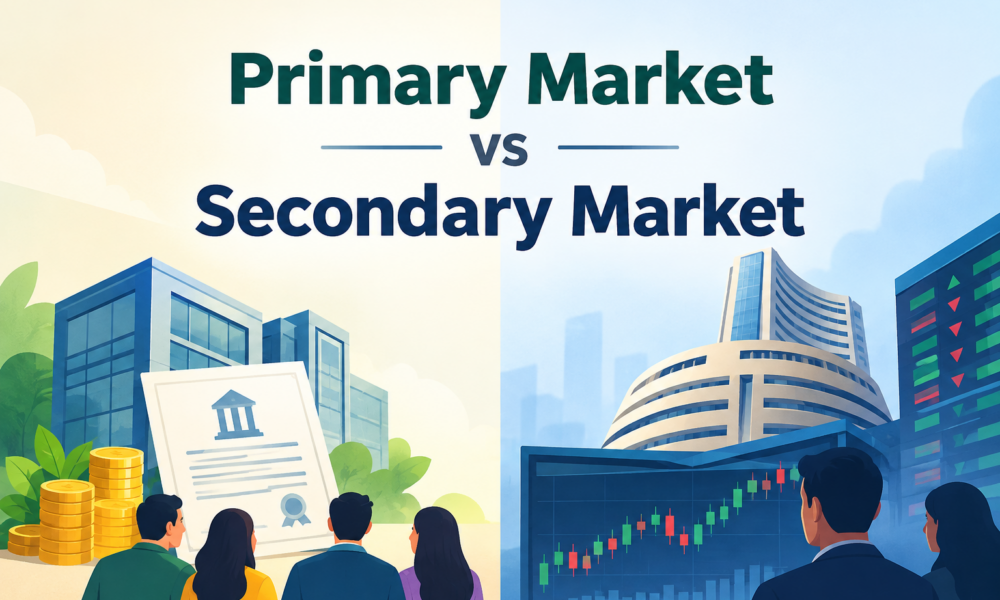
You apply for shares in an IPO and receive 20 shares. A few days later, those shares appear on the stock exchange. When you sell them to another investor, are you still dealing with the company?
Table Of Content
Not quite. You apply for newly issued securities in the primary market. Buying and selling already issued securities happen in the secondary market. The same share can move through both markets at different stages of its life.
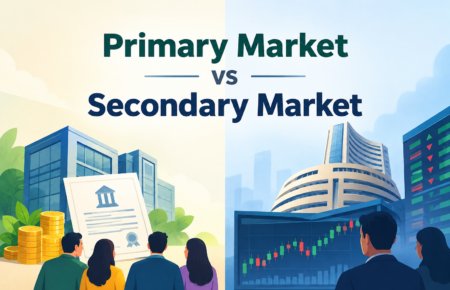
Understanding the difference between the primary market vs secondary market helps you see how companies raise capital, how securities reach investors, and what happens after those securities are listed.
Primary Market vs Secondary Market: Key Differences
Looking at primary and secondary market examples makes the difference easier to understand. An IPO is an example of primary-market participation, while buying an already listed share from another investor is a secondary-market transaction.
What is primary market?
It is the place where companies or other issuers offer newly issued securities to investors.
- Main function: Issues new securities
- Main participants: Issuing company and investors
- Flow of money: To the issuer or selling shareholders
- Pricing: Fixed price or book-built issue price
- Examples: IPO, FPO, rights issue, public bond issue
- Main benefit: Capital raising
- Main risk: Valuation, allotment, limited market history
- Investor action: Apply during the issue period
What is secondary market?
It is where investors buy and sell securities that have already been issued.
- Main function: Trades already issued securities
- Main participants: Buyers, sellers, brokers, exchanges
- Flow of money: To the selling investor
- Pricing: Determined by demand and supply
- Examples: Buying/selling listed shares on NSE or BSE
- Main benefit: liquidity and price discovery
- Main risk: Price volatility, liquidity risk
- Investor action: Place buy or sell orders
The key difference between primary and secondary market is who sells the security and where the money goes. In the primary market, newly issued securities help raise capital. In the secondary market, investors trade securities that have already been issued.
What Changes for the Investor?
The difference between primary and secondary market becomes clearer when you look at what the investor actually does.
- In the primary market: You review the offer document. Then, you apply during the issue window. ASBA or UPI has blocked your funds. Finally, you wait to see if you get shares. If allotted, they land in your demat account.
- In the secondary market: You can place buy or sell orders through your trading account and broker. You watch a market-linked price. You can exit whenever the market is open. Prices can move throughout the session.
Three Situations Beginners Often Confuse
- Situation 1: “I want to apply for a new IPO.” This is primary market participation.
- Situation 2: “I want to buy a listed company’s shares today.” This is secondary market participation.
- Situation 3: “I received IPO shares and want to sell them after listing.” Allotment occurs in the primary market. Then, sales take place in the secondary market.
These primary and secondary market examples show how the same security can move from an initial issue to regular trading between investors.
Primary Market vs Secondary Market: Risks to Know
- Primary-market risks
- Secondary-market risks
- Aggressive valuation
- Price volatility
- Limited public-market history
- Sudden price changes after news
- No or partial allotment
- Low liquidity in some securities
- Listing price may differ from issue price
- Possibility of selling at a loss
- Business and offer-document risks
- Market and company-specific risks
SEBI’s review of offer-document disclosures is not a guarantee of returns or profitability. It’s a disclosure check, not a performance promise.
Beginner Checklist
Before applying in the primary market:
- Read the offer document
- Check if it’s a fresh issue, OFS, or both
- Understand how the funds will be used
- Review financials and risk factors
- Don’t rely only on social media opinions
- Know the application and allotment steps
Before trading in the secondary market:
- Check the company’s financials and valuation
- Understand your order type
- Review liquidity and bid-ask spreads
- Consider your investment horizon
- Avoid buying because the price is rising
- Use a registered intermediary
Final Takeaway
The primary market vs secondary market difference comes down to what happens to the securities and where the money goes. In the primary market, companies or other issuers offer new securities to raise capital. In the secondary market, investors buy and sell securities that have already been issued.
The primary market helps companies raise funds, while the secondary market provides liquidity and ongoing price discovery for investors.
- Primary market: Companies issue new securities
- Secondary market: Investors trade existing securities
- Listing: Connects the two stages
FAQs
What is the difference between primary market vs secondary market?
The primary market is where companies sell new securities directly to investors. This helps them raise fresh capital. The secondary market is where investors buy and sell already issued securities. Here, money moves between investors, not to the company.
Is an IPO part of the primary or secondary market?
An IPO is part of the primary market. It’s when an unlisted company sells shares to the public for the first time. This helps raise money or allows current shareholders to sell their shares.
What is primary market?
The primary market is where companies or other issuers offer newly issued securities to investors.
What is secondary market?
The secondary market is where investors buy and sell securities that have already been issued.
Does the company receive money from secondary-market trading?
Generally, no. In a typical secondary-market deal, the buyer pays the investor selling the shares. This money does not go to the company that issued them. The company only receives funds during the original issue process.