



What Is Exit Price?
When you buy a stock, you usually have one question in mind: what is exit price when you eventually decide to sell? Simply put, the exit price is the actual price at which you close a trade. For a...

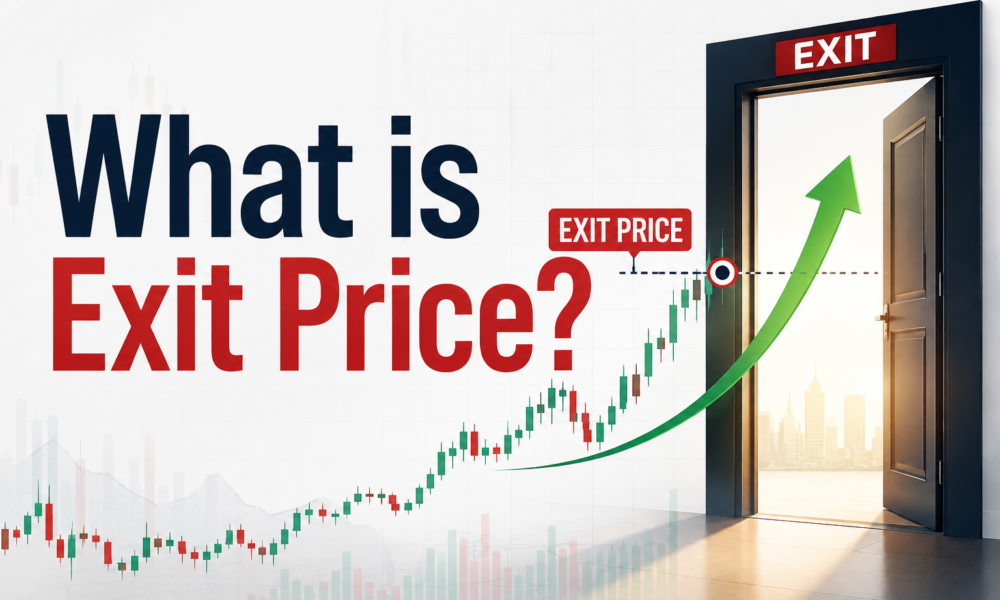
When you buy a stock, you usually have one question in mind: what is exit price when you eventually decide to sell? Simply put, the exit price is the actual price at which you close a trade. For a long position, this usually means selling the stock, while for a short position, it means buying the stock back.
Table Of Content
If you have ever bought a stock and later sold it, you have already used an exit price. The price at which your trade is actually closed becomes your exit price, and it can directly affect whether you make a profit or take a loss.
What Is Exit Price in the Stock Market?
Exit price is the price at which a trader closes a position. For a long position, this usually means selling the asset. For a short position, it generally means buying it back to close the trade.
In intraday, swing, and long-term trading, the exit price keeps changing. The Stock Market’s Exit Price doesn’t have a prior record or is not fixed for a share; it just depends on the moment when you exit the trade.
How Exit Price Works When Closing a Trade
When you decide to close a position, you place a sell order through your broker’s platform. Depending on the order type, the price at which your shares get sold may be exactly what you expected, or slightly different. The exit price is the actual price at which your order is executed. You can learn more about how orders are executed through the NSE trading system.
Entry Price and Exit Price: The Relationship
Entry price and exit price together decide the outcome of any trade. The entry price is your cost, and the exit price is your selling price of a stock. The difference between the two determines profit and loss in trading.
Here is a simple example.
Suppose you buy a share of a company at ₹100. If you later sell it at ₹115, your exit price is ₹115, and you earn a profit of ₹15 per share, before charges and taxes. On the other hand, if you sell the same share at ₹95, your exit price is ₹95, resulting in a loss of ₹5 per share.
This shows how the difference between the entry price and exit price determines whether a trade results in a profit or a loss, before applicable charges and taxes.
Target Price and Stop-Loss Order
Most traders have an exit strategy when they enter a trade. The target price is the price at which you intend to close your trade and profit from the deal, whereas a stop-loss order allows you to sell your shares at a specific price to prevent further losses. Together, target prices and stop-loss orders can form an important part of an exit strategy.
How Traders Decide an Exit Price
There is no single method for deciding an exit price. Some traders make decisions based on their trading strategy; others might look at technical indicators such as support/resistance, risk/reward ratios, or market volatility. An intraday trader will have a different approach from a long-term investor who holds the stock for years.
The price displayed on your screen may not always be the price at which your order is executed. This can happen during periods of high volatility or low liquidity. The difference between the expected price and actual execution price is known as slippage.
Exit Price Versus Closing Price
The closing price is the official market price at which a stock finishes the trading session. The exit price, on the other hand, is the actual price at which a trader closes their own position. Therefore, your exit price can be different from the stock’s closing price.
Why Exit Price Matters for Risk Management
Exit price plays an important role in risk management. It allows you to protect your profits, secure your capital, and prevent potential losses from turning into significant ones. Many traders, however, forget about their exit strategy, and, as a result, hold losing trades for too long, waiting for an opportunity to close them at a profit.
Conclusion
Exit price is the actual price at which a trader closes a position. It plays an important role in determining the profit or loss of a trade. By planning a target, stop-loss, and overall exit strategy, traders can make more disciplined decisions and manage risk more effectively.