




What is a Depository? (Simple Explanation for Indian Investors)
Imagine holding all your shares without a single sheet of paper in sight. No certificates stuffed in a drawer, no risk of termites eating your investments, no running to a bank locker every time you...

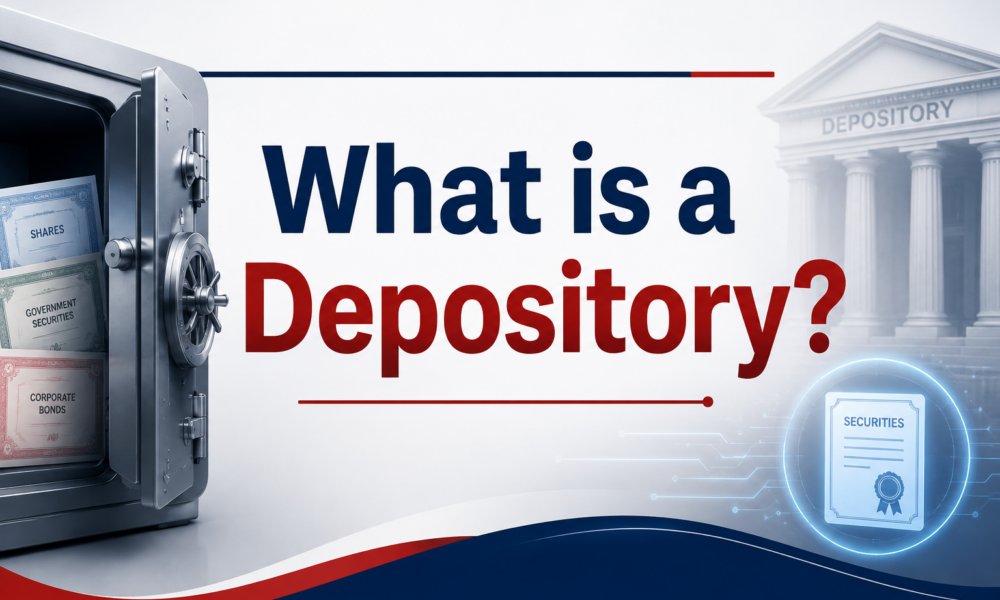
Imagine holding all your shares without a single sheet of paper in sight. No certificates stuffed in a drawer, no risk of termites eating your investments, no running to a bank locker every time you want to sell. Sounds convenient, right? That’s exactly what a depository does for you.
Table Of Content
So, what is a depository? Simply put, it’s an institution that holds your securities, shares, bonds, and mutual funds in electronic form, on your behalf. Think of it as a digital custodian keeping your investments safe, minus the paperwork.
For every Indian investor, understanding this isn’t optional. It’s the backbone of how your Demat account works, and once it clicks, the whole stock market system starts making a lot more sense.
How Does a Depository Work?
Understanding what is a depository becomes easier when you think of it as the infrastructure that records and facilitates the electronic holding and transfer of your securities.
Here’s the basic flow. You, as an investor, don’t deal with the depository directly. Instead, you go through a depository participant (DP), usually your broker or bank, who acts as the middleman.
When you buy shares, your DP instructs the depository to credit those dematerialized shares into your account. When you sell, the reverse happens. The depository, in stock market terms, works like a bank for shares, except instead of storing money, it stores your securities in electronic form.
But where do these shares actually stay? Not with your broker, and not even fully with the depository in a physical sense; they exist as digital entries, almost like numbers in a ledger, tracked with complete accuracy.
Depository vs Depository Participant: What’s the Difference?
People often mix these two up, so let’s clear the confusion once and for all.
- Depository: The organisation that actually holds your securities electronically. There are only two in India.
- Depository Participant (DP): Your access point to the depository, typically a broker, bank, or financial institution registered as an agent.
The difference between depository and depository participant boils down to this: the depository is the vault, and the DP is the counter clerk who helps you access it. You’ll never interact with NSDL or CDSL directly, it’s always through your DP.
NSDL and CDSL: India’s Two Main Depositories
NSDL and CDSL are the two SEBI-registered depository institutions operating in India. NSDL (National Securities Depository Limited) was the first one, launched back in 1996, while CDSL (Central Depository Services Limited) came a little later.
Wondering which one holds your shares? Check your Demat account statement or Client ID. If it starts with “IN,” you’re likely with NSDL. CDSL accounts usually show a numeric ID instead. Either way, both are equally safe and SEBI-regulated, so there’s no need to pick sides.
Why Is a Depository Important for Investors?
Still wondering why a depository is important for investors? Here’s what it brings to the table:
- Safety — no risk of theft, forgery, or loss of physical certificates
- Faster transfer of securities — settlements happen within a day or two
- No stamp duty hassles on electronic transfers
- Easy handling of corporate actions like dividends, bonus shares, and stock splits
- Pledging shares for loans becomes far simpler
This is essentially the benefits of the depository system in a nutshell: speed, safety, and convenience, all rolled into one.
Common Charges and Things to Know
Depository charges usually include account opening fees (often free these days), annual maintenance charges (AMC), and small transaction fees per debit. These vary by DP, so it’s worth comparing before you commit.
If you’re a small investor with holdings under a certain value, you might qualify for a BSDA (Basic Services Demat Account), which comes with reduced or zero AMC. It’s a nice little perk many beginners don’t know about.
How to Open a Demat Account Linked to a Depository
Once you understand what is a depository, it becomes much easier to see how your Demat account, broker, and securities are connected.
Curious how a depository works in India when you are just starting? It’s easier than it sounds:
- Choose a DP, a broker or bank you trust
- Submit your KYC documents (PAN, Aadhaar, bank proof)
- Get your Demat and trading account activated together
- Start investing once your account is linked to NSDL or CDSL
Now that you know what is a depository, you are one step closer to investing with confidence. The paperwork-free world of stock markets isn’t as complicated as it first seemed, is it?