




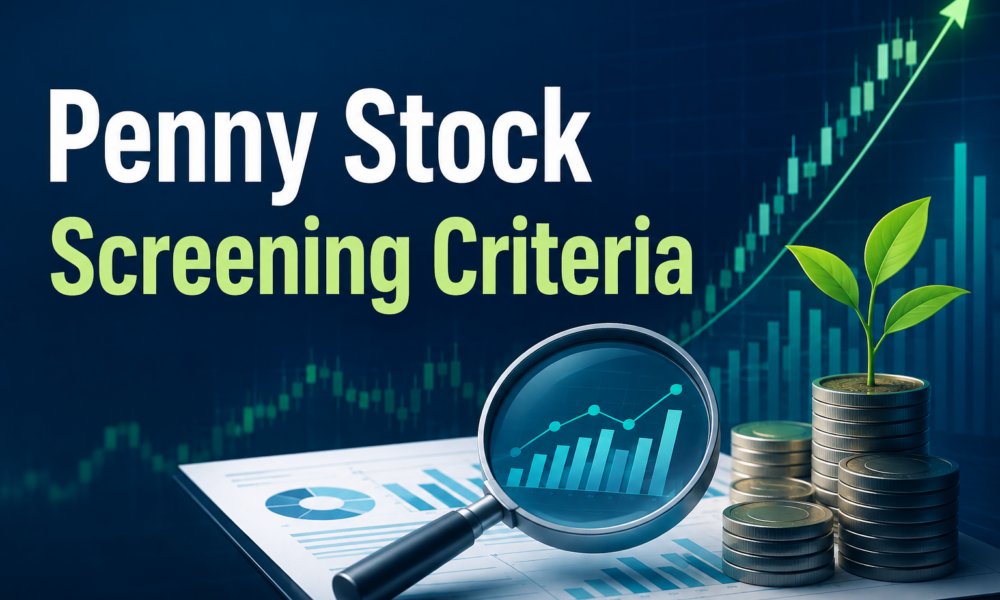
7 Penny Stock Screening Criteria for Indian Traders
You have seen those 100x penny stock stories on Twitter: someone bought a stock at ₹3, and it’s ₹300 now. Sounds tempting, right? But for every story like that, hundreds bought a “hot...

You have seen those 100x penny stock stories on Twitter: someone bought a stock at ₹3, and it’s ₹300 now. Sounds tempting, right? But for every story like that, hundreds bought a “hot tip” and watched it crash 90% in a month.
Table Of Content
There’s no official SEBI definition of a penny stock, but in penny stocks in India 2026, most traders mean anything under ₹20-50 with a small market cap. These stocks move fast, and that’s exactly why screening matters. Without proper filters, you are gambling, not investing. Liquidity in penny stocks is often terrible; operators love manipulating these counters, and plenty sit on piles of debt with no real business behind the price. That’s where solid penny stock screening criteria come in, filtering out junk so you are left with companies that can actually grow.
By the end of this guide, you will know exactly how to filter safe, high-potential penny stocks using free tools, no paid subscriptions, no insider tips, just data.
Why Most Penny Stocks Fail (And How to Avoid Them)
I have seen traders lose money chasing volume spikes and WhatsApp forwards. Most penny stocks fail for the same handful of reasons, and once you know them, they’re easy to spot.
First, operator-driven price action: a small group buys heavily, retail piles in on FOMO, and operators exit, leaving everyone holding a falling stock. This is the classic pump-and-dump scheme pattern, common in penny stocks.
Second, low or declining promoter holding, sometimes with pledging (borrowing money against their own shares). If the people running the company aren’t confident enough to hold their stake, why should you be?
Third, high debt with negative cash flows: a company constantly borrowing to survive rarely turns into a multibagger penny stocks story.
Finally, illiquidity traps. Trade less than 50,000 shares a day, and you might not exit when you want to. Watch the SEBI regulations penny stocks framework and the GSM/ASM surveillance lists; stocks placed there face trading restrictions.
For a better understanding of investor due diligence, SEBI Investor recommends checking a company’s business model, financial statements, cash flows, price and volume data, and other relevant information before investing. SEBI Investor – Due Diligence
7 Essential Penny Stock Screening Filters
Let me break down the core penny stock screening criteria into a table you can copy into any screener.
| Filter | Ideal Threshold | Why It Matters |
| Price | Under ₹20 | Keeps you in the true “penny” range |
| Avg. Daily Volume | Above 50,000 shares | Ensures you can actually buy and sell |
| Promoter Holding | Above 30% (ideally 50%+) | Shows skin in the game |
| Debt/Equity | Below 1 (preferably 0.5) | Signals low financial risk |
| ROCE | Above 15% | Shows the company uses capital efficiently |
| Revenue Growth (3Y CAGR) | Above 15% | Confirms real business momentum |
| Market Cap | Above ₹100 crore | Helps avoid shell companies |
Pro Tip: Add “Promoter Pledging = 0%” and “Operating Cash Flow > 0” for extra safety, this filters out a huge chunk of risky small-cap stocks India traders keep falling for.
Let’s talk about what these filters actually mean, because jargon without explanation helps nobody.
- Price under ₹20 is self-explanatory; that’s the range most people mean by penny stocks under ₹20. Average daily volume above 50,000 shares matters because trading volume filters indicate whether real buyers and sellers exist or whether you’ll get stuck holding the stock.
- A promoter holding percentage above 30%, ideally higher, tells you the founders believe in their own company. A debt-to-equity ratio below 1 means the company owes less than it owns, basically what people mean by debt-free penny stocks in India or penny stocks with debt to equity <1.
- Return on capital employed (ROCE) above 15% shows the company generates decent returns on its money, not just sitting idle. Revenue CAGR above 15% over three years shows real growth, a sign of penny stocks with revenue growth >15%. Market capitalization above ₹100 crore filters out tiny shell companies.
- Get more selective by combining penny stocks with ROCE >20% with penny stocks with high promoter holding in India; that combo knocks out most of the junk. A handful of high dividend-yielding penny stocks exist too, though rare; don’t chase yield without checking fundamentals.
How to Apply These Filters (Step-by-Step)
Here’s what actually works. Head to Screener.in, the free and best free stock screener for penny stocks in India, since you can build your own penny stock screening criteria query.
Try something like this in the query box, which gives you penny stocks under ₹20 with volume >50k and clean balance sheets: Price < 20 AND Volume > 50000 AND Promoter Holding > 30 AND Debt to Equity < 1 AND ROCE > 15
Hit run, and a list of stocks appears. Sort by Revenue Growth or ROCE, then check each one for consistent growth across years. Tickertape’s screener works the same way and has a more visual interface for beginners. This is essentially how to find multibagger penny stocks before they rally, not tips, but filtering hard data.
Free Tools & Screeners (With Direct Links)
These free stock screening tools make up a solid stock screener India lineup:
- Screener.in — custom fundamental queries
- Tickertape Screener — clean, beginner-friendly
- Chartink — technical plus fundamental screening
- Pocketful, Dhanarthi, Stockmo and Univest — solid alternatives
For trades, you’ll need a broker — Groww, Dhan, Zerodha, Angel One, or 5paisa. For official data, cross-check NSE India, BSE India, or SEBI directly, not a forwarded screenshot.
Red Flags to Avoid
Don’t skip checks just because a stock “looks cheap.” Check the GSM or ASM surveillance list on NSE or BSE. Watch for frequent auditor changes, often a sign something’s hidden. Negative operating cash flow for three years straight is a dealbreaker. If promoter holding is below 20% or keeps falling, walk away; that’s how to avoid operator-driven penny stocks. These red flags are just as much a part of penny stock screening criteria as the filters above.
FAQs
Which penny stocks will become multibaggers in 10 years?
Nobody can say for sure. Good fundamental analysis penny stocks investors trust means looking at fundamentally strong penny stocks with low debt and rising revenue.
How much should I invest in penny stocks?
Keep it a small slice of your portfolio, many cap it at 5-10%.
What is the best screener to find penny multibagger stocks?
Screener. in and Tickertape are both free and reliable.
Are penny stocks safe for long-term investment?
Not inherently, but strict screening, like the seven filters above, gets you closer to safe penny stocks for long-term investment in 2026 compared to buying blindly.
Can penny stocks give 100x returns in India?
It’s happened before, but it’s rare and usually took years.
Conclusion
Let’s get real, penny stock screening criteria isn’t glamorous. It’s spreadsheets and patience. But price under ₹20, volume above 50k, promoter holding above 30%, and debt-to-equity under 1 save you from most bad picks in this space.
Scanning penny stocks in India 2026 this way, hunting for penny stocks with zero debt and strong fundamentals rather than tips, is the closest shortcut to the best penny stocks to buy now. Build your own screen and treat every “sure shot” tip with suspicion.
This article is for educational purposes only and is not investment advice. Please consult a SEBI-registered financial advisor before investing in penny stocks or any other securities.