




What is a Demat Account?
A Demat Account is an electronic account that holds your shares and other securities in digital form, instead of paper certificates. Think of it like a bank account, but instead of storing rupees, it...

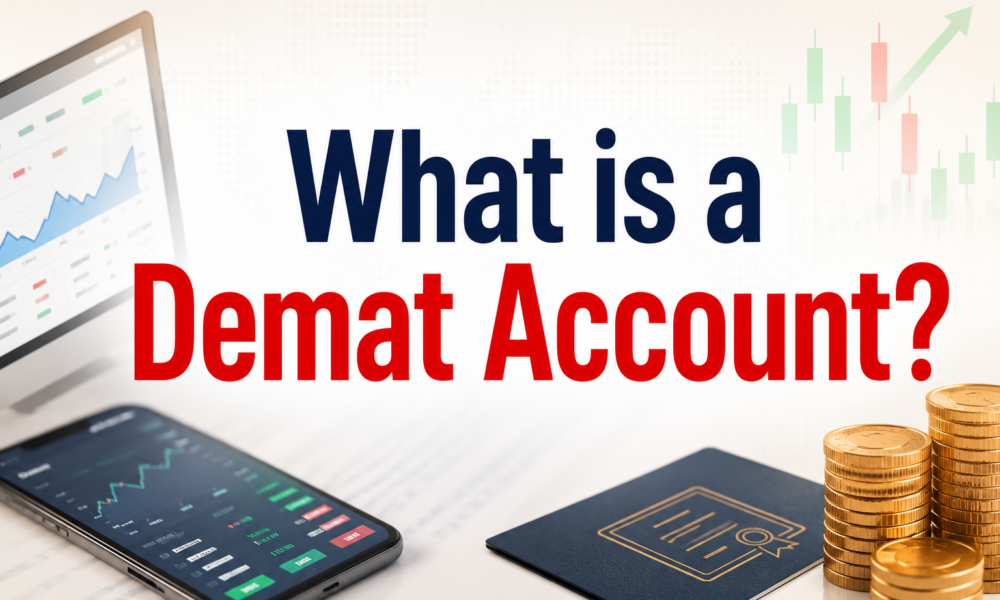
A Demat Account is an electronic account that holds your shares and other securities in digital form, instead of paper certificates. Think of it like a bank account, but instead of storing rupees, it stores your shares, bonds, and mutual fund units. Just as a bank account records how much money you have, a Demat account records exactly which shares you own and how many. In India, this account is essential if you want to buy shares online or invest in the stock market at all.
Table Of Content
Before dematerialisation became common, investors had to store paper certificates safely at home and handle transfers manually, which was slow and risky. A Demat account removes that hassle by updating your holdings automatically every time you trade.
How a Demat Account Works
When you buy shares, they are not printed on paper anymore. Instead, the shares are converted into electronic form through a process called dematerialisation, and stored in your Demat account. Your account is managed by a Depository Participant (DP), usually your broker or bank, and it’s linked to your trading account and your bank account so money and shares move smoothly between them. Every DP works under one of two depositories, NSDL or CDSL, which are the two organisations responsible for holding India’s electronic shares securely.
Example: When you buy 10 shares of TCS, they are credited to your Demat account instead of a paper certificate.
Key benefits and charges
Holding shares electronically makes investing far simpler than the old paper-based system. Here are some of the main advantages:
- No risk of losing, damaging, or forging physical certificates
- Faster, safer transfers whenever you buy or sell shares
- Easy to hold shares online and track your entire portfolio in one place
- Works for shares, bonds, ETFs, and mutual fund units, not just stocks
- Simplifies paperwork when applying for IPOs or transferring holdings
There are a few standard costs to know about. Most DPs charge a small account-opening fee, along with an annual maintenance charge (AMC) to keep the account active. Brokerage and transaction charges for actual buying and selling are usually billed separately by your trading account provider, not the Demat account itself.
Demat vs Physical certificates
| Demat Account | Physical Certificates |
| Electronic shares, stored safely online | Paper shares, prone to loss or damage |
| Fast, easy transfers and settlements | Slow, manual transfer process |
| Managed through NSDL or CDSL | No central digital record |
Documents and how to open one
If you are wondering how to open a Demat account in India, the good news is that it’s mostly an online process today, and it usually takes less than a day if your documents are ready. You’ll typically need:
- PAN card
- Aadhaar card
- A cancelled cheque or bank statement
- A passport-size photograph
- Address proof (utility bill, passport, or similar)
- Signature proof, if requested by your broker
To get started, pick a broker registered with NSDL or CDSL, the two depositories that hold India’s electronic securities. Most brokers now let you complete video KYC and e-sign your application from home, so there is no need to visit a branch. During this process, you will receive a unique DP ID, which identifies your account with the depository and is used whenever you buy or sell shares.
Once verified, remember to link your Demat account with your bank account, since this is what allows money to move automatically whenever you trade. After that step, you are all set and ready to start investing.
A Demat account is the foundation of modern investing in India. Whether you are planning to invest in stocks, ETFs, mutual funds, or IPOs, having a secure Demat account makes managing your investments simple, safe, and completely paperless.