





SEBI Algo Trading Rules 2026: Complete Guide for Indian Retail Traders
So the messages have been piling up in every trading community I’m part of: “Is my API dead now?” “Did SEBI actually ban algo trading?” “What’s this static...

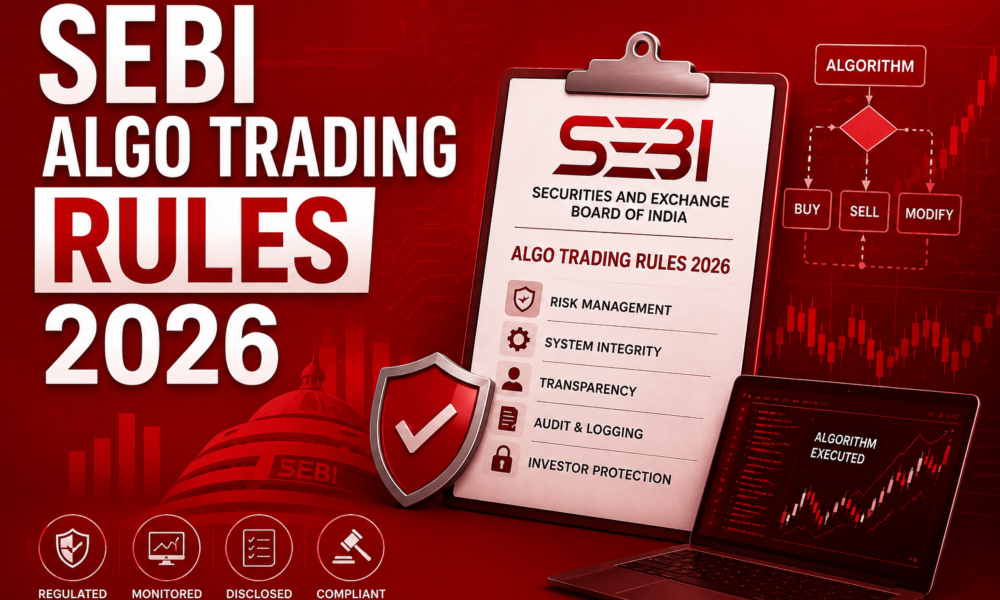
So the messages have been piling up in every trading community I’m part of: “Is my API dead now?” “Did SEBI actually ban algo trading?” “What’s this static IP thing everyone’s panicking about?” Fair questions. The SEBI algo trading rules 2026 have genuinely changed how retail algo trading in India functions, and the April 1, 2026, SEBI deadline for algo trading has already passed for brokers who were required to comply by then.
Table Of Content
- Why SEBI Tightened Algo Trading Regulations for Retail Traders
- Timeline – From 2025 Circulars to the April 1, 2026 SEBI Deadline for Algo Trading
- Core SEBI Algo Trading Rules 2026 for Retail API Users
- Is SEBI Banning Algo Trading in India in 2026? (Myth vs Reality)
- Order to Trade Ratio (OTR) SEBI 2026 – What Algo Traders Must Watch
- How to Make Your Algo Trading Setup Compliant With SEBI 2026 Rules
- FAQs
Here’s the thing, though, most of the panic is misplaced. Nobody’s shutting down your bot. What’s changed is more about paperwork, traceability, and a few technical tweaks than it is about taking away your ability to automate trades.
Let’s go through it properly, section by section, so you know exactly what applies to you.
Why SEBI Tightened Algo Trading Regulations for Retail Traders
Institutional desks have operated under algorithmic trading rules since 2012. Retail traders, running their own Python scripts or plugging into a broker’s API, mostly didn’t. That gap mattered more than people realised. A badly coded script firing off hundreds of orders a second looks a lot like market manipulation, even when it isn’t intentional, and there was no real way to trace it back to its source.
That’s really the whole point behind the SEBI regulations on algorithmic trading in India. It’s not a crackdown dressed up in nice language. SEBI wants every algo order traceable to a strategy, wants brokers to actually know what’s running on their systems, and wants a baseline of protection for retail investors who might not fully understand the risks of the tool they’re using. Think seatbelt law, not driving ban.
Timeline – From 2025 Circulars to the April 1, 2026 SEBI Deadline for Algo Trading
This didn’t come out of nowhere. SEBI issued a circular back in February 2025 laying out the framework for safer participation of retail investors in algorithmic trading. The original plan was to have brokers compliant by mid-2025, but that got pushed back twice, brokers needed time to actually build the infrastructure, not just tick a compliance box.
By April 1, 2026, that grace period was over. The NSE retail algo trading framework became mandatory across the board: every broker, every algo, every order. If your broker hadn’t sorted their systems by then, they weren’t allowed to keep onboarding API clients the old way.
Core SEBI Algo Trading Rules 2026 for Retail API Users
Strategy Registration and Algo-IDs
Under the new SEBI algo trading rules 2026, every order an algorithm places, new order, modification, cancellation, all of it, now carries a unique exchange-issued strategy ID. Your broker handles the tagging on the backend, so in practice, you won’t see much of this happening. But it means regulators can, in theory, trace any weird market activity straight back to the specific strategy that caused it.
There’s also a bigger structural shift buried in the SEBI algo trading regulations 2026: brokers are now treated as the principal party responsible for whatever runs through their infrastructure. If you’re connecting through a third-party algo platform, your broker has to have approved and registered that platform first. Accountability has moved up the chain, basically.
SEBI API Trading Rules for Retail Traders
This is the part that actually touches your day-to-day setup. The sebi api trading rules for retail traders boil down to a handful of concrete changes:
- Static IP requirement for API trading: You register one or two fixed IP addresses with your broker, and only those IPs are allowed to send orders through your API. Anything else gets bounced.
- Two-factor authentication is now compulsory, with OAuth-based login replacing the older, looser methods that a lot of platforms used to get away with.
- There’s an order-per-second threshold, too. Stay under 10 orders per second, and your broker’s own tagging covers you, no separate registration needed. Cross that line regularly, and you’ll need formal approval for your strategy.
- And brokers are now required to keep audit trails of API and algo activity for years, not months. Every trade stays traceable long after it happens.
All of this sits under what people are calling broker api restrictions and risk controls, the idea being that both the exchange and you, the trader, are better protected if there’s a proper paper trail behind every automated order.
Is SEBI Banning Algo Trading in India in 2026? (Myth vs Reality)
Is Algo Trading Legal for Retail Investors After SEBI’s 2026 Rules?
No, and no. Let’s kill this one properly. Is Sebi banning algo trading in India in 2026? It is genuinely one of the most searched phrases on this whole topic right now, and the answer is a firm no. Is algo trading legal for retail investors in India post these changes? Yes, completely. You can still write your own scripts, still use approved third-party platforms. The difference is that everything now runs through registered, traceable channels instead of the semi-informal setup that a lot of people were using before.
Order to Trade Ratio (OTR) SEBI 2026 – What Algo Traders Must Watch
What Is OTR and Why Does It Matter for Algo Trading
The order to trade ratio (OTR) SEBI 2026 is basically a measure of how many orders you place versus how many actually get executed. Place a thousand orders and cancel 950 of them, and your ratio looks suspicious; exchanges read that pattern as disruptive, sometimes even manipulative, and there are penalties attached.
New OTR Exemptions Under SEBI Algo Trading Regulations 2026
The 2026 update provides some relief for genuine traders. Normal order cancellations due to changing market conditions or price movements are not intended to be treated the same as manipulative order activity. During periods of high market volatility, traders may need to modify or cancel orders more frequently as prices fluctuate rapidly. This is why understanding market volatility is important, as routine trading behaviour should not be confused with abusive practices such as order spamming.
How to Make Your Algo Trading Setup Compliant With SEBI 2026 Rules
If you’re wondering how to make your algo trading setup compliant with SEBI 2026 rules, here’s roughly what that looks like in practice:
- Check with your broker that your strategy or third-party tool is actually registered with the exchange, don’t assume it is just because it worked fine last year.
- Get your static IP whitelisted before you try running anything live. This is the one thing that trips people up most, because it needs to be sorted in advance, not on the fly.
- Turn on 2FA/OAuth login if your broker hasn’t forced it on you already.
- Keep an eye on your order rate. If you’re nowhere near 10 orders a second, you probably don’t need to do anything extra here.
- And honestly, just call your broker if you’re unsure. Compliance teams are dealing with this exact question from hundreds of traders right now; you’re not going to be the annoying one asking.
FAQs
Is SEBI banning algo trading in India in 2026?
No. It’s being regulated more tightly, not banned. A properly registered, compliant setup keeps running exactly as before.
Is algo trading legal for retail investors after SEBI’s 2026 rules?
Yes. You just need your strategy registered through your broker and your API access aligned with the static IP and 2FA requirements.
What actually happens if I ignore all this?
Your orders get rejected, simple as that. Coming from an unregistered IP or an unapproved tool means the broker or exchange won’t let the order through.