





Diwali Muhurat Trading: A Blend of Tradition and Prosperity
In India, money isn’t just a piece of paper or a tool to buy things with – it’s seen as divine, a blessing from the gods. We worship it in many forms, like Laxmi Ji, the goddess of...


In India, money isn’t just a piece of paper or a tool to buy things with – it’s seen as divine, a blessing from the gods. We worship it in many forms, like Laxmi Ji, the goddess of wealth, and Kuber, the lord of riches.
Table Of Content
This deep-rooted tradition is especially tied to Diwali, the biggest and most awaited festival in India. On this day, people welcome and worship Ganesh Ji, Laxmi Ji, and Saraswati Ji during the grand “Laxmi Pooja”.
Businessmen in India strongly believe — no business should stay closed on Diwali, as this day is all about Laxmi Ji- the goddess of wealth. Hence keeping the tradition of business, on Diwali, stock market of India especially opens for an hour session, known as Diwali Muhurat Trading, to welcome Laxmi Ji’s blessing for the following year.
In this blog, we would read into Diwali Muhurat Trading 2024, history of Diwali Muhurat Trading, and how it rolls out. So without further fuss, let’s jump right in.
Muhurat Trading 2024 – The Timings
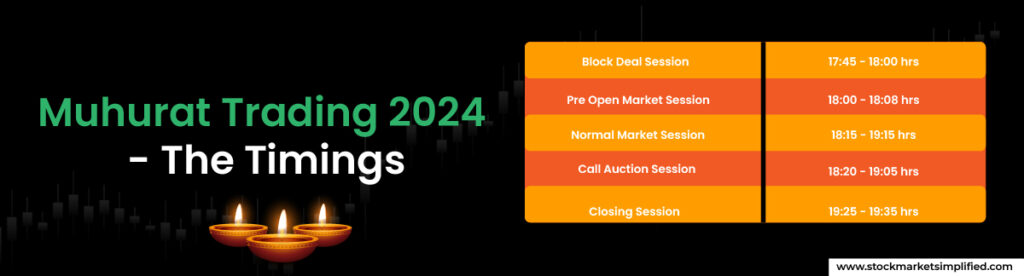
Muhurat Trading in 2024 is set for November 1st, starting with a pre-open session from 6:00 PM to 6:08 PM. This will be followed by the main trading session, which will run from 6:15 PM to 7:15 PM on both the BSE and NSE. Below is a detailed list of the Muhurat Trading timings:
| Muhurat Trading Session | Timing (In Hours) |
| Block Deal Session | 17:45 – 18:00 hrs |
| Pre Open Market Session | 18:00 – 18:08 hrs |
| Normal Market Session | 18:15 – 19:15 hrs |
| Call Auction Session | 18:20 – 19:05 hrs |
| Closing Session | 19:25 – 19:35 hrs |
What is Diwali Muhurat Trading?

The term ‘Muhurat’ or ‘मुहूर्त’ means “auspicious time” in Hindu Culture where it is believed stars and planets work in favor to bring positive outcomes.
Hence, Diwali Muhurat Trading is a unique, one-hour trading session held on the evening of Diwali, during the most auspicious time or “Muhurat.” It’s not just about trading stocks; it’s about blending age-old traditions with modern-day financial practices.
On Diwali, businessmen perform a special pooja – known as ‘Chopad Pujan’ – and worship their account books or ledgers. Traders believe that just like Chopad Pooja marks a fresh start for their businesses, investing during Muhurat Trading brings prosperity and good fortune. It’s a way to ensure that the blessings of Maa Laxmi flow into their trades, setting the tone for a profitable year ahead.
Every year, the stock exchange sets a special time for ‘Muhurat Trading’, usually in the evening on Diwali. It’s a tradition where many people buy stocks as a symbolic token of “Goddess Lakshmi”, for her blessings in their investments. This is something you’ll only find in the Indian stock markets, making it a unique mix of tradition and trading!
Also read: Stock Market Basics
History of Muhurat Trading In India: When Did It All Begin?

For stockbrokers, Diwali has always been more than just lights and sweets — it marked the start of their new financial year. On this day, during the Muhurat, they’d open new settlement accounts for their clients, starting fresh with the blessings of Goddess Lakshmi.
The tradition of Muhurat Trading officially started with the Bombay Stock Exchange (BSE) in 1957. Later, in 1992, the National Stock Exchange (NSE) also began holding Muhurat trading on Diwali.
Another common practice is the Chopda Pujan, where brokers would worship their account books. There was an old belief that Marwari traders would sell stocks during this time because they thought money shouldn’t come into the house on Diwali, while Gujarati traders would buy. Though this isn’t common anymore, it’s still a fun part of the tradition’s history.
These days, Muhurat Trading is more about the symbolic gesture. Investors, after performing “Lakshmi Pujan” or “Chopad Pujan”, often invest in strong companies, hoping for good returns and blessings for the year ahead.
What Happens During Muhurat Trading?

On Diwali, both the NSE (National Stock Exchange) and BSE (Bombay Stock Exchange) open their doors for trading for a special limited time. Here’s how the session usually unfolds:
- Block Deal Session: This is when two parties agree on buying or selling a security at a fixed price and inform the stock exchange.
- Pre-Open Session: Here, the stock exchange sets the starting price, usually taking about eight minutes.
- Muhurat Trading Session: This is the main event! It lasts for one hour, and this is when most trading happens.
- Call Auction Session: In this part, less active stocks (illiquid securities) are traded. These are stocks that don’t see much buying or selling.
- Closing Session: Finally, traders can place orders at the closing price.
It’s a quick but exciting time in the Indian stock market, happens only in the country among other nation in the world.
“If the stock market is an ocean, Muhurat Trading shows how deeply the culture and values are rooted among Indians that it has created its own course to flow.”
Afterall, it’s not about trading only— it’s about inviting Laxmi Ji’s blessings for the year ahead.
Dos and Don’ts to Keep In Mind for Muhurat Trading

While the values and culture should be carried forward with time, it’s important to remember – the stock market is still the stock market — it operates the same way and carries the same risks.
Hence as we wrap, here we have listed some key points to keep in mind before you leap into buying or selling stocks during Muhurat Trading 2024 on Diwali:
DOs
- Auspicious Timing: Many traders believe this time is lucky for making investments. But don’t let tradition cloud your judgment. The stock market follows its own rules, so don’t jump in blindly or you might find this auspicious moment turning into a disaster.
- Do Stay Informed: Make sure you understand the basics of any stock you’re interested in. This way, you’re not just following the crowd; you’re making informed decisions.
- Do Keep an Eye on Support and Resistance Levels: Markets can be volatile during this time, so staying aware of these levels can help guide your trading decisions.
- Do Focus on Fundamentals: If you’re planning to invest long-term, make sure to look at the company’s fundamentals before diving in. Stick to your investment strategy and know your risk tolerance.
- Do Select Stocks with Good Trading Volume: If you want to benefit from market volatility, focus on stocks that have high trading volumes since you only have a one-hour trading window.
DON’Ts:
- Don’t Jump In Blindly: Just because it’s a special day doesn’t mean you should rush into trades. Avoid making impulsive decisions that could lead to regrets.
- Don’t Ignore Risks: Remember, the stock market behaves the same way regardless of the occasion. Don’t forget that every investment comes with its own risks.
- Don’t Forget About Settlement Obligations: Keep in mind that any open positions by the end of the session will have settlement obligations, so be prepared!
- Don’t Expect Guarantees: Just because a stock does well on Diwali doesn’t mean it will keep performing well in the future. Always consider the fundamentals and market conditions before investing.
By keeping these dos and don’ts in mind, you can make the most of your Muhurat Trading experience while staying smart and strategic!
FAQs
Can anyone participate in Muhurat Trading?
Yes! Anyone with a trading account can participate, whether you’re a seasoned investor or beginner, whether you’re the tradition-follower or just loves the trading, market rules will treat everyone the same.
What stocks should I buy during Muhurat Trading?
It’s best to focus on fundamentally strong companies that you believe will perform well in the long run. Follow due diligence and avoid running money on the basis of some gossip or hunch.
Do I have to sell my stocks during Muhurat Trading?
No, you don’t have to sell. You can choose to buy, sell, or hold stocks, depending on your investment strategy.
What should I avoid during Muhurat Trading?
Avoid making impulsive decisions based on hype or emotions. Stick to your plan and do proper research.
Is there a specific time limit for trading?
Yes, the Muhurat Trading session typically lasts for one hour, so make sure you’re prepared to trade within that time frame.