




What Is the Strike Price?
What is the strike price? It is the fixed price at which an option holder can buy or sell the underlying asset if they choose to exercise the contract. It is set when the option is created and never...

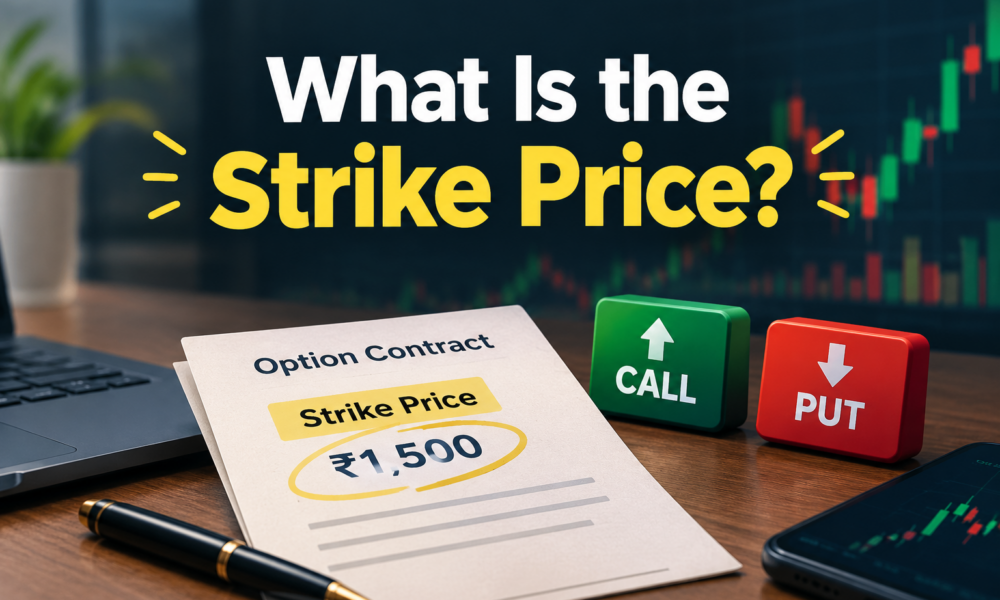
What is the strike price? It is the fixed price at which an option holder can buy or sell the underlying asset if they choose to exercise the contract. It is set when the option is created and never changes, no matter how far the market moves afterward.
Table Of Content
If you’re new to options, understanding the options basics can help you understand how strike prices, premiums, expiration dates, calls, and puts work.
Strike Price Meaning
If you are asking what is the strike price in practical terms, think of it as the agreed number written into an options contract. It is the level at which a call lets you buy, or a put lets you sell, a stock, index, or other asset. Some sources call it the exercise price, which means the same thing.
People who search what does it mean usually want to know why it exists at all. It gives both sides of the contract a fixed reference point. Without one, nobody could measure an option’s value.
How Does a Strike Price Work?
Exchanges list options at regular intervals, such as $95, $100, and $105 for a stock trading near $100. Each level is its own contract. To understand how it works, start by seeing that the strike price in options is a benchmark, not a forecast. It sits beside two other details: the expiration date and the premium.
The premium is what the buyer pays upfront for the contract. Strike price and premium move together in a fairly predictable way. A call with a lower strike usually costs more, because it starts closer to being profitable.
Strike Price in Call and Put Options
A call option strike price is the price at which the holder may buy the asset. Calls gain value when the market price rises above the strike. A put option strike price is the price at which the holder may sell. Puts gain value when the market price falls below it.
Strike Price vs Market Price
The market price is where the asset trades right now. Comparing strike price vs market price shows whether an option has intrinsic value today, and it creates three labels:
- In-the-money: a call is in-the-money when the market price is above the strike. A put is in-the-money when the market price is below it.
- At-the-money: the strike and the market price are roughly equal.
- Out-of-the-money: a call has a strike above the market price, and a put has a strike below it.
In-the-money options carry intrinsic value, which lifts their premium. Out-of-the-money options hold only time value, which is the chance that the market moves the right way before expiry.
Why Does the Strike Price Matter?
So, what is the strike price telling you? It marks where profit can begin. The break-even point for a call is the strike plus the premium. For a put, it is the strike minus the premium.
The strike price of an option also shapes risk. An out-of-the-money option costs less but needs a bigger move to pay off. An in-the-money option costs more but responds more directly to price changes. Anyone choosing a strike price weighs their market view, the time left, the premium, and the loss they can tolerate. This is general education, not advice for any individual.